Fire, light, heaven, the sun and shield, and the created heavens reveal true aspects of God’s holiness, goodness, transcendence, protection, and glory without functioning as portraits of His being.
The Bible uses fire, light, heaven, the sun and shield, and the created heavens to reveal true aspects of God’s holiness, goodness, rule, protection, and glory. These images are not portraits of God the Father, and none gives an exhaustive description of His being. They are God-given words and signs that help finite people speak truthfully about the One whom “the heaven and heaven of heavens cannot contain” (1 Kings 8:27, KJV).
Careful theology preserves both sides. We should not empty biblical symbols until they mean nothing, and we should not treat a metaphor or visible sign as though God were literally identical to a created object. Scripture says, “God is a Spirit” (John 4:24, KJV). Fire is His servant, light is His creation, and heaven cannot contain Him. Yet He truly uses these realities to make His character and works known.
Key takeaways
- Biblical symbols reveal truth by analogy; they do not contain or fully define God.
- Fire can communicate holy presence, guidance, purity, and judgment, depending on context.
- “God is light” speaks of His perfect holiness and truth, with no moral darkness in Him.
- Calling God “Our Father which art in heaven” emphasizes His sovereign transcendence, not confinement to a location.
- “A sun and shield” describes the Lord as the source of favor and protection; it does not identify Him with the physical sun.
- Creation declares God’s glory while remaining distinct from the Creator.
- Symbolic Christian art can point to biblical attributes without claiming to depict the Father’s face or body.
How should we read biblical symbols about God?
A symbol draws a real comparison while preserving a difference. When Psalm 84:11 says the Lord is “a sun and shield,” it tells the truth about life-giving favor and protection. It does not say God is a star or a piece of military equipment. Context tells us which aspect of the image matters.
We must also distinguish the persons of the Trinity without separating the one God. Father, Son, and Holy Spirit are not interchangeable names for one person. Some Old Testament appearances speak simply of the LORD or of the angel of the LORD without identifying the acting person as “the Father.” We should not make a passage more specific than Scripture makes it. For comparison, biblical symbols of the Holy Spirit should be read in their own contexts rather than transferred automatically to the Father.
Five biblical images and what they mean
Fire: holy presence, guidance, and judgment
Fire is one of Scripture’s most arresting signs of divine action. At Horeb, “the angel of the LORD appeared unto” Moses “in a flame of fire out of the midst of a bush” (Exodus 3:2, KJV). The bush burns without being consumed, Moses removes his shoes on holy ground, and God commissions him to lead Israel out of Egypt.
The text joins fire with holy presence, revelation, and calling. It does not say that the visible flame is God’s essence, nor does it require us to identify the manifestation specifically as the Father. The living God makes Himself known while remaining free and sovereign over the sign.
After the exodus, “the LORD went before them” by night “in a pillar of fire, to give them light” (Exodus 13:21, KJV). Here fire means gracious guidance and protection in darkness. The sign fits Israel’s need: God leads His people on a real journey and does not leave them to find their own way.
Fire also warns. Moses tells Israel, “the LORD thy God is a consuming fire, even a jealous God” (Deuteronomy 4:24, KJV), in a passage forbidding idolatry. Hebrews repeats, “our God is a consuming fire” (Hebrews 12:29, KJV) while calling believers to reverence. The point is not that God is unstable or destructive by nature. His holy love opposes idolatry and evil; He cannot be managed as one more household power.
Light: perfect holiness, truth, and generous goodness
First John gives the direct statement, “God is light, and in him is no darkness at all” (1 John 1:5, KJV). John immediately connects it with truthful fellowship and walking in the light. Light communicates God’s moral purity, self-revelation, and truth. Darkness cannot stain or deceive Him.
Again, this is not a claim that God is electromagnetic radiation. He created physical light. The metaphor tells us that there is no hidden evil in Him. Bringing sin into His light is therefore not an attempt to inform an unaware God; it is honest confession before the One who already knows and who cleanses through Christ (1 John 1:7–9).
James calls Him “the Father of lights,” from whom every good and perfect gift comes, “with whom is no variableness, neither shadow of turning” (James 1:17, KJV). “Lights” naturally points to the heavenly lights God made. Unlike their changing positions and shadows, the Giver is steadfastly good. James is assuring tested believers that temptation does not arise from some dark turn in God’s character.
“Our Father which art in heaven”: rule without confinement
Jesus teaches His disciples to pray, “Our Father which art in heaven, Hallowed be thy name” (Matthew 6:9, KJV). The address holds intimacy and majesty together. Believers approach God as Father, but not as a familiar projection of human parenthood. His name is holy, His kingdom is coming, and His will is to be done on earth as in heaven.
Heaven in this prayer emphasizes God’s transcendent rule and the realm in which His will is perfectly obeyed. It does not locate Him inside the universe as though the highest sky were a house large enough to contain Him. At the temple dedication Solomon asks, “will God indeed dwell on the earth?” and confesses that even “the heaven of heavens cannot contain thee” (1 Kings 8:27, KJV).
God is present everywhere and dependent on nowhere. He is near to hear prayer, yet He is not one being among other beings. Praying to the Father in heaven lifts our eyes above immediate pressures without making Him remote. The rest of the Lord’s Prayer assumes His daily care for bread, forgiveness, testing, and deliverance.
“The LORD God is a sun and shield”: favor and protection
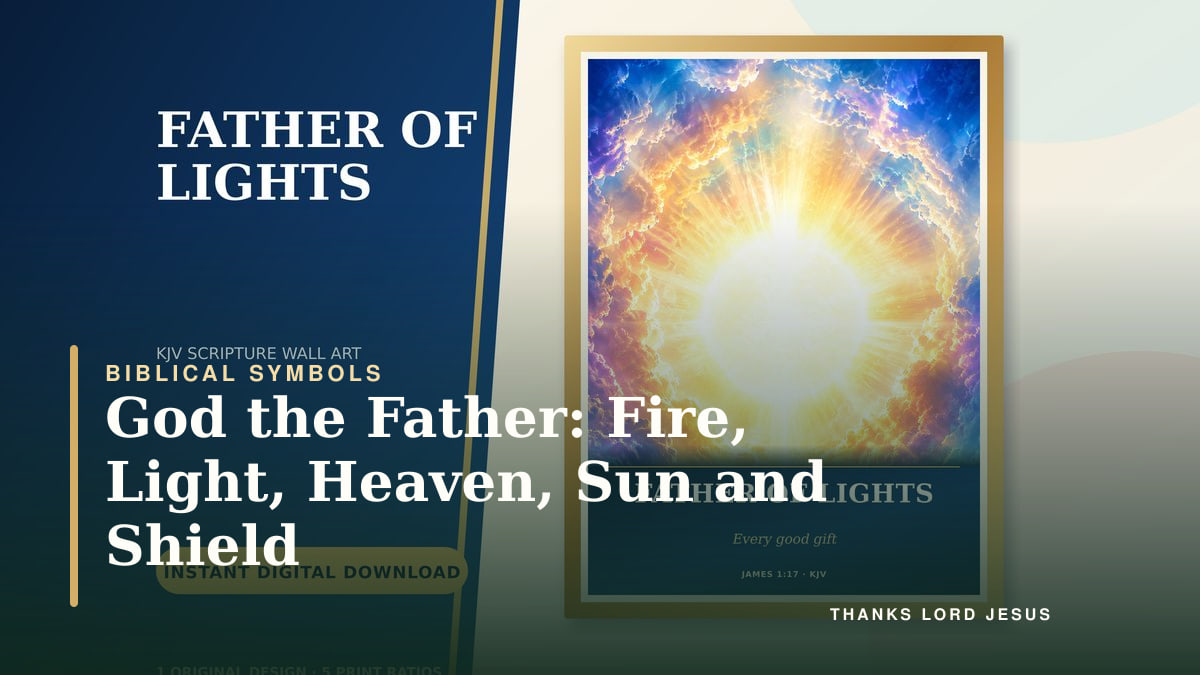
Psalm 84 celebrates longing for God’s dwelling place. Near its conclusion it says, “For the LORD God is a sun and shield: the LORD will give grace and glory” (Psalm 84:11, KJV). The paired images interpret one another within a promise of God’s goodness.
As sun, the Lord gives light, warmth, life, and favor. As shield, He guards. The verse is not sun worship; biblical faith sharply distinguishes the Creator from the heavenly bodies. The physical sun is made by God and serves His purposes. Calling the Lord “sun” poetically declares that every good path is illuminated and sustained by Him.
The heavens declare His glory: creation as witness, not deity
“The heavens declare the glory of God; and the firmament sheweth his handywork” (Psalm 19:1, KJV). Stars, skies, sun, seasons, order, scale, and beauty bear witness to the Creator’s power and wisdom. Creation communicates because it is His handiwork.
The heavens are a signpost, not God Himself. Psalm 19 moves from creation’s wordless witness to the Lord’s written law, reminding us that nature does not tell the whole saving story.
The Names of God Scripture art collection offers another way to study what God has revealed about His character. Names and titles, like symbols, should lead us back to their passages rather than become detached spiritual labels.
How is the invisible Father made known?
Christian theology does not end with general symbols. John writes, “No man hath seen God at any time”; the only begotten Son “hath declared him” (John 1:18, KJV). Jesus says, “he that hath seen me hath seen the Father” (John 14:9, KJV), not because Father and Son are the same person, but because the Son perfectly reveals the Father.
Fire, light, heaven, and creation teach truly. The fullest revelation of the Father’s character is the incarnate Son, who makes Him known through His words, works, death, and resurrection. Revelation 1 then presents that Son in overwhelming glory; explore the imagery in Jesus in Revelation: symbols and meaning.
Using biblical symbols in art without making depiction claims
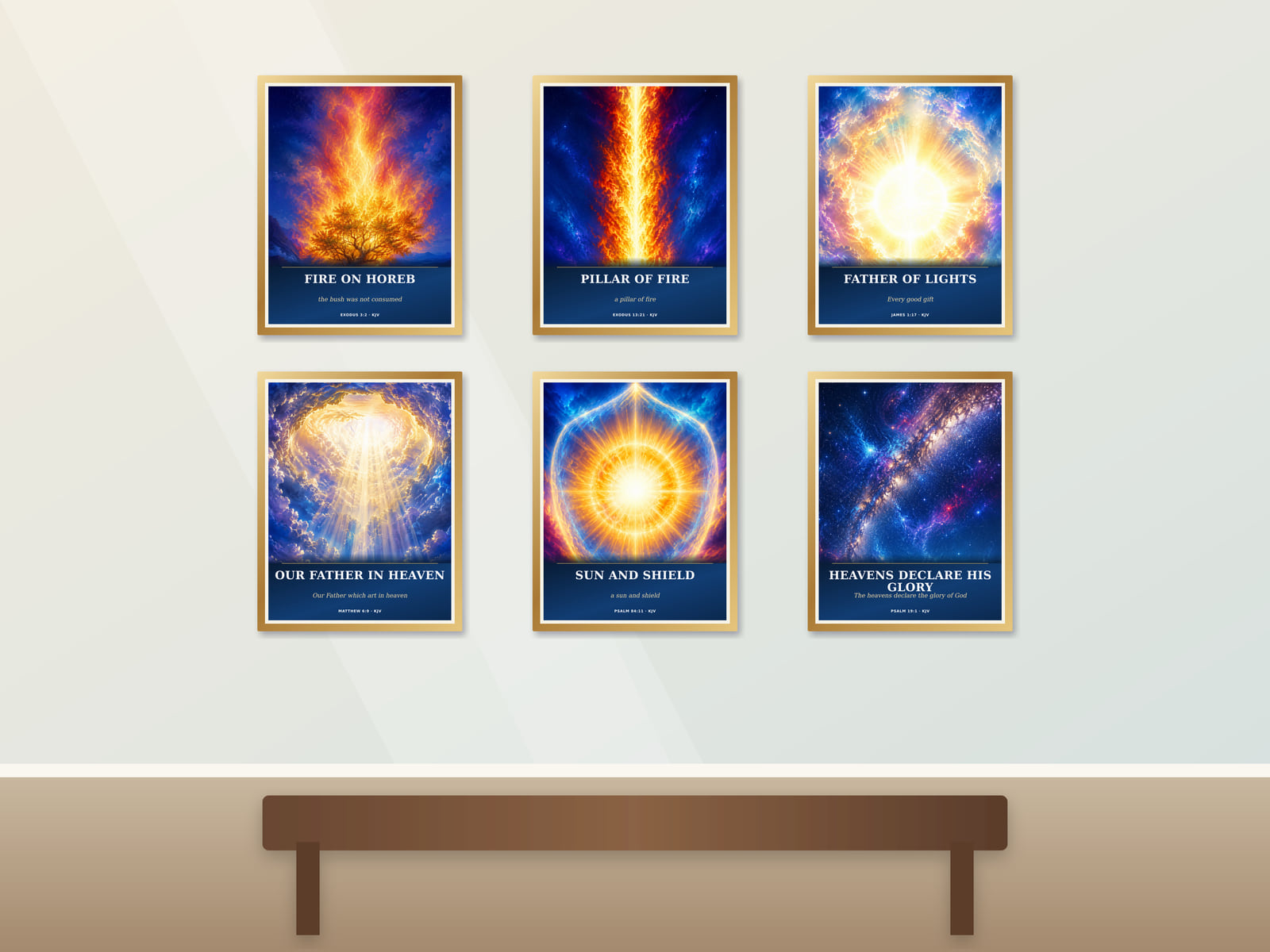
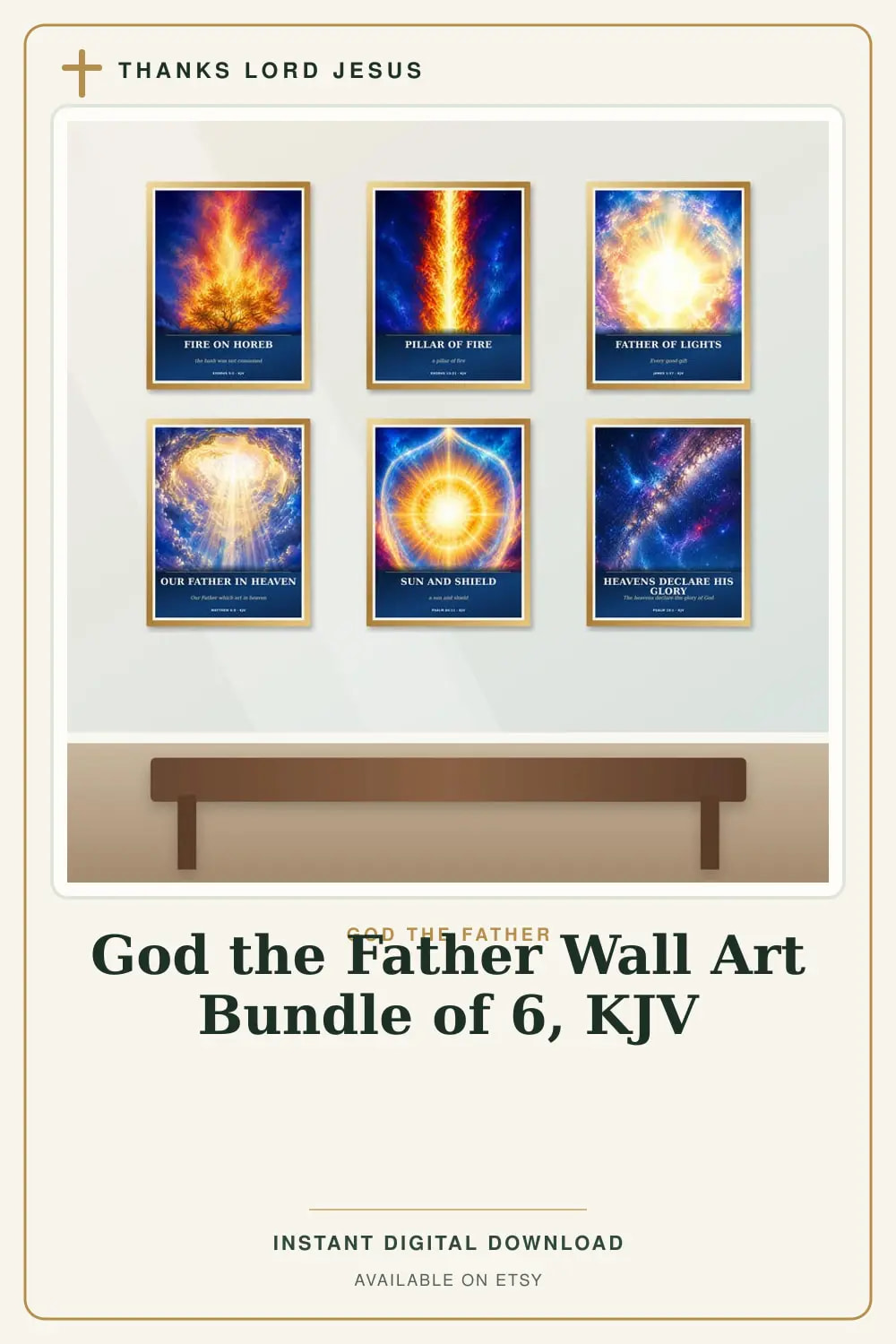
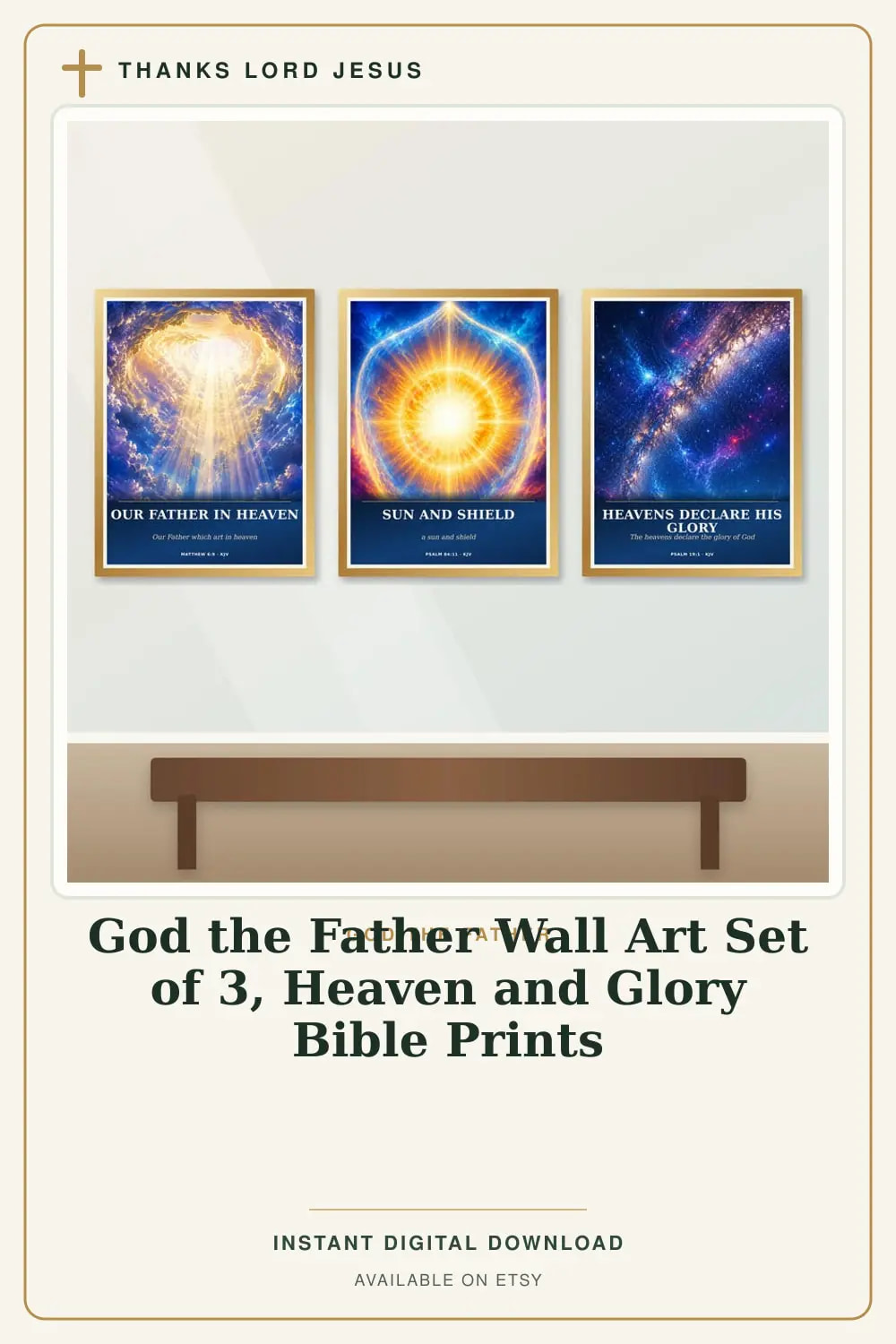
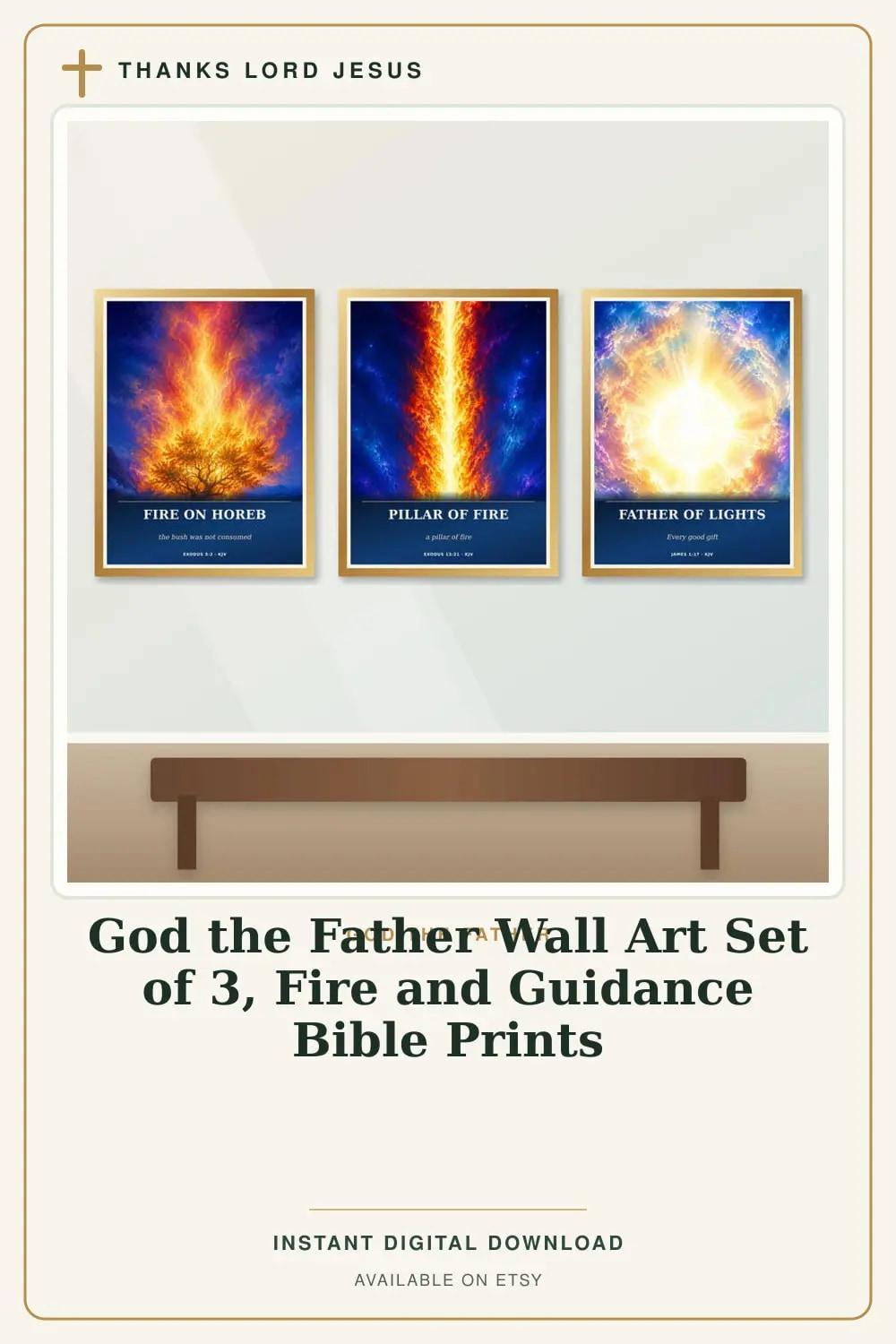
Our God the Father Scripture art collection uses a burning bush, pillar of fire, radiant light, heaven, sun and shield, and the created heavens. These are visual references to biblical passages. They do not claim to portray the Father’s appearance, face, or body, and they do not imply that God is identical with fire, sunlight, or sky.
This approach also requires honesty about artistic interpretation. No design can reproduce divine glory or contain God’s being. Color, composition, and light are created choices meant to help a viewer remember a text. The verse reference remains essential because Scripture, not the artwork, gives the symbol its authority.
A faithful response: reverence, trust, and worship
Hold the images together without confusing them. The Father is not a collage of created objects. He is the living God whom the symbols serve. Let each image open the biblical passage, let the passage correct imagination, and let revealed truth lead to worship.
Related printable Scripture art
Keep this biblical truth in view.
Frequently asked questions
Questions about this topic
What are common biblical symbols associated with God the Father?+
Scripture associates God with images such as fire, light, heaven, sun, shield, throne, and the glory displayed in creation. Each must be read in context; no single image is a complete definition or physical portrait of God.
Does “God is light” mean God is literally sunlight?+
No. First John 1:5 uses light to speak of God’s perfect holiness, truth, and absence of moral darkness. God created physical light and is not identical with a created form of energy.
What does it mean that God is a consuming fire?+
In Deuteronomy 4:24 the phrase warns Israel against idolatry and stresses God’s holy jealousy. Hebrews 12:29 uses it to call believers to reverent worship. It communicates holiness and judgment, not a physical description of God’s essence.
Is God the Father contained in heaven?+
No. Jesus teaches believers to address the Father in heaven, emphasizing His holy, sovereign rule. First Kings 8:27 says even the heaven of heavens cannot contain God, so heaven is not a boundary around His presence.
Does symbolic art depict what God the Father looks like?+
Not when it is presented carefully. Fire, light, heaven, sun, shield, and creation can point to biblical truths without claiming to show the Father’s face or bodily appearance. The artwork should direct viewers to the cited Scripture, which governs the symbol’s meaning.
Scripture for your space