Biblical praise declares God’s worth and works; worship is the whole-person response of reverence, love, trust, obedience, and delight that belongs to God alone.

In the Bible, praise openly declares God’s greatness and works, while worship is the whole-person response of reverence, love, trust, obedience, and delight that belongs to God alone. The two overlap deeply: songs of praise can be worship, and worship naturally gives rise to praise. Yet biblical worship is larger than music. It includes bowing, thanksgiving, listening to God’s Word, serving, giving, praying, obeying, and offering daily life to Him.
Key takeaways
- Praise names God’s character and mighty works; worship responds to His worth with the whole life.
- Biblical worship must be directed to the true God and shaped by truth, not only sincere emotion.
- Thanksgiving remembers God’s gifts, while praise moves from the gifts to the Giver.
- Scripture welcomes singing, instruments, kneeling, raised voices, silence, service, and obedient living in their proper settings.
- A “new song” is a fresh response to God’s saving work, not a demand to chase novelty.
- Praise can be offered in suffering because God’s character remains worthy and His promises remain sure.
- Public worship and private devotion strengthen one another; neither replaces life in the gathered church.
What is the difference between praise and worship?
The Bible’s vocabulary is rich, and the English words praise and worship sometimes overlap. Praise commonly speaks outward: bless the Lord, sing, tell, thank, celebrate, declare His works. Worship often emphasizes reverence, service, homage, and a posture of submission. Bowing and kneeling make that inward surrender visible.
Jesus gives the essential standard: “the true worshippers shall worship the Father in spirit and in truth” (John 4:23, KJV). Worship is not secured by a location, atmosphere, style, or volume. It is awakened by the Spirit, engaged from the heart, and governed by the truth God has revealed.
Ten praise and worship passages to know
Psalm 150:6 — Let everything that has breath praise the Lord
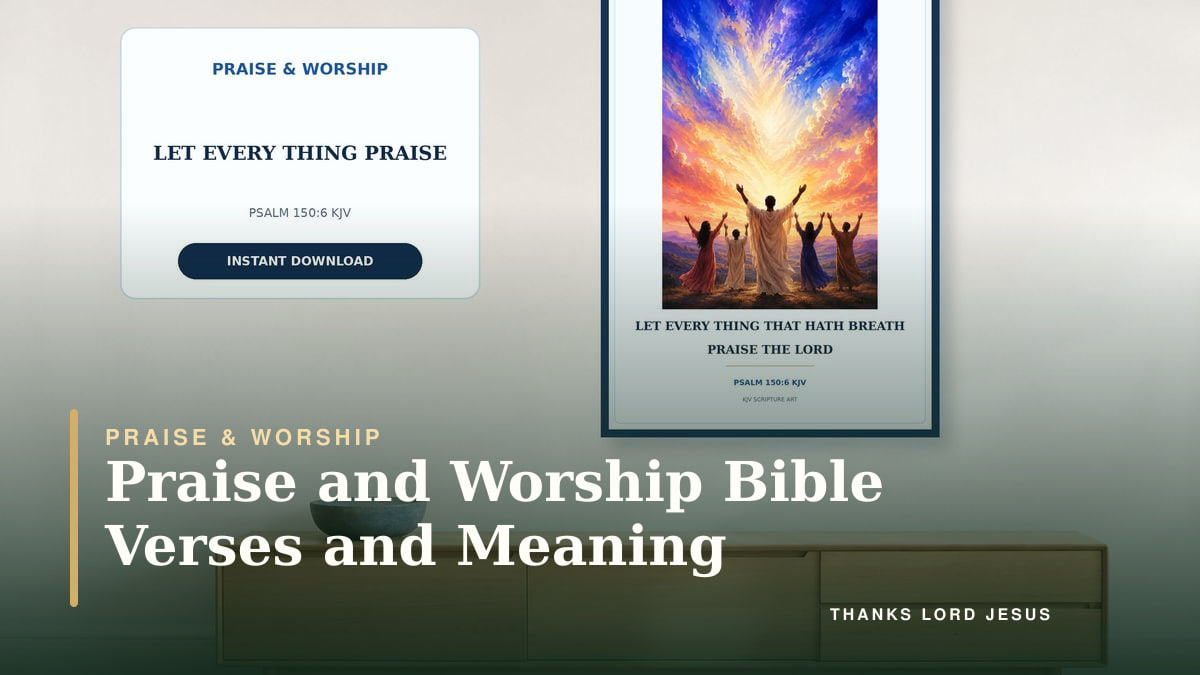
“Let every thing that hath breath praise the LORD. Praise ye the LORD” (Psalm 150:6, KJV). This final line is the summit of the Psalter. Psalm 150 gathers sanctuary, mighty acts, excellent greatness, trumpet, strings, percussion, dance, and breath into one call to praise.
Breath is ordinary and miraculous. Every living moment is received, not self-created. The verse turns that gift toward its Giver. It also widens the choir: praise is not reserved for professionals with polished voices. Everyone who breathes is summoned.
Psalm 100:4 — Enter with thanksgiving and praise
“Enter into his gates with thanksgiving, and into his courts with praise” (Psalm 100:4, KJV). Thanksgiving remembers what God has given and done. Praise confesses who He is. The next words connect both: “be thankful unto him, and bless his name.”
Psalm 100 grounds joyful worship in theology: “the LORD he is God,” He made us, we are His people, “the LORD is good,” His mercy is everlasting, and His truth endures (verses 3–5, KJV). The command to rejoice is not emotional manipulation. It is a response to God’s identity and covenant faithfulness.
Psalm 95:6 — Worship, bow down, and kneel
“O come, let us worship and bow down: let us kneel before the LORD our maker” (Psalm 95:6, KJV). Worship involves the body because human beings are embodied creatures. Kneeling can express humility, dependence, repentance, and allegiance.
The psalm does not stop with posture. It continues, “To day if ye will hear his voice, harden not your heart” (verses 7–8, KJV). A bowed body with a resistant heart misses the point. True worship listens. It welcomes God’s authority rather than using a beautiful moment to avoid obedience.
Psalm 96:1 — Sing unto the Lord a new song
“O sing unto the LORD a new song: sing unto the LORD, all the earth” (Psalm 96:1, KJV). The new song is linked to fresh declaration of God’s salvation: “shew forth his salvation from day to day” (verse 2, KJV). God’s acts deserve a living response rather than empty repetition.
“New” does not make older hymns inferior. Scripture itself preserves ancient songs for repeated use. Nor does novelty guarantee truth. A faithful new song expresses God’s unchanging character and mighty works in words people can understand and sing.
Isaiah 61:3 — The garment of praise for the spirit of heaviness
Isaiah speaks of the Lord’s anointed servant comforting those who mourn and giving “the garment of praise for the spirit of heaviness” (Isaiah 61:3, KJV). Jesus reads the opening of this passage in Nazareth and announces its fulfillment (Luke 4:16–21). Praise here grows from God’s saving action toward the brokenhearted and captive.
The verse should not be used to shame people for grief, depression, trauma, or exhaustion. Isaiah does not tell mourners to manufacture cheerfulness so God will accept them. The Anointed One comes to comfort and restore. Praise is a gift of grace within that renewal.
In hard seasons, a “garment of praise” may look like borrowing the church’s song, whispering one true line, or reading a psalm aloud when original words will not come. Seeking pastoral, medical, or professional help can accompany faith; it is not a failure to worship.
Psalm 149:3 — Praise with music and movement
“Let them praise his name in the dance: let them sing praises unto him with the timbrel and harp” (Psalm 149:3, KJV). Together with Psalm 150, this verse shows that biblical praise can be joyful, artistic, physical, and loud. Music and movement can express celebration before God.
Faithful Christians and church traditions differ about how particular Old Testament instruments and dance apply in gathered New Testament worship. The verse should not be used to question the sincerity of a quiet congregation, just as personal reserve should not be used to despise joyful expression. Whatever the form, worship must seek God’s honor, order, love for the gathered body, and truth.
John 4:23–24 — Worship in spirit and in truth
Jesus’ conversation with the Samaritan woman moves beyond the rivalry between Mount Gerizim and Jerusalem. “God is a Spirit,” He says, “and they that worship him must worship him in spirit and in truth” (John 4:24, KJV).
Sincerity alone is not enough; people can sincerely worship a false idea. Correct words alone are not enough; lips can speak while hearts remain far away. Christian worship depends on God’s self-revelation and engages the inner person. It comes to the Father through the Son in the life the Spirit gives.
Romans 12:1 — Offer your life as worship
After explaining God’s mercies in the gospel, Paul urges believers to “present your bodies a living sacrifice, holy, acceptable unto God, which is your reasonable service” (Romans 12:1, KJV). The word translated “service” carries worshipful meaning. Gospel truth moves into embodied devotion.
A living sacrifice worships through ordinary decisions: using speech to build rather than destroy, practicing hospitality, serving faithfully, refusing revenge, giving generously, working honestly, and caring for vulnerable people. Sunday singing is not disconnected from Monday conduct.
The order matters. We do not offer life to purchase mercy. Paul says “by the mercies of God.” Christian obedience is grateful response to grace already announced in Christ.
Hebrews 13:15 — Praise as a continual sacrifice
“By him therefore let us offer the sacrifice of praise to God continually,” Hebrews says, “that is, the fruit of our lips giving thanks to his name” (Hebrews 13:15, KJV). “By him” keeps Jesus at the center. Christian praise approaches God through Christ rather than through the excellence of the singer.
The next verse joins verbal praise with action: “to do good and to communicate forget not.” In KJV usage, “communicate” here carries the idea of sharing. Worship includes lips that confess God’s name and hands that share with others. A song that never touches generosity is incomplete.
Colossians 3:16 — Sing the Word together
“Let the word of Christ dwell in you richly … teaching and admonishing one another in psalms and hymns and spiritual songs” (Colossians 3:16, KJV). Congregational singing is horizontal as well as vertical. Believers address God and also place truth in one another’s memory.
For prayerful songs and promises born in many seasons, explore the Psalms of Peace and Protection collection or read Psalm 23 on comfort, guidance, and protection.
How to build a rhythm of praise and worship
Begin with Scripture rather than waiting for a mood. Read a short passage and identify one truth about God. Turn that truth into a sentence of praise. Add specific thanks. Confess what needs to change. Sing or listen attentively to a biblically faithful song. Then choose one act of obedience flowing from what you have read.
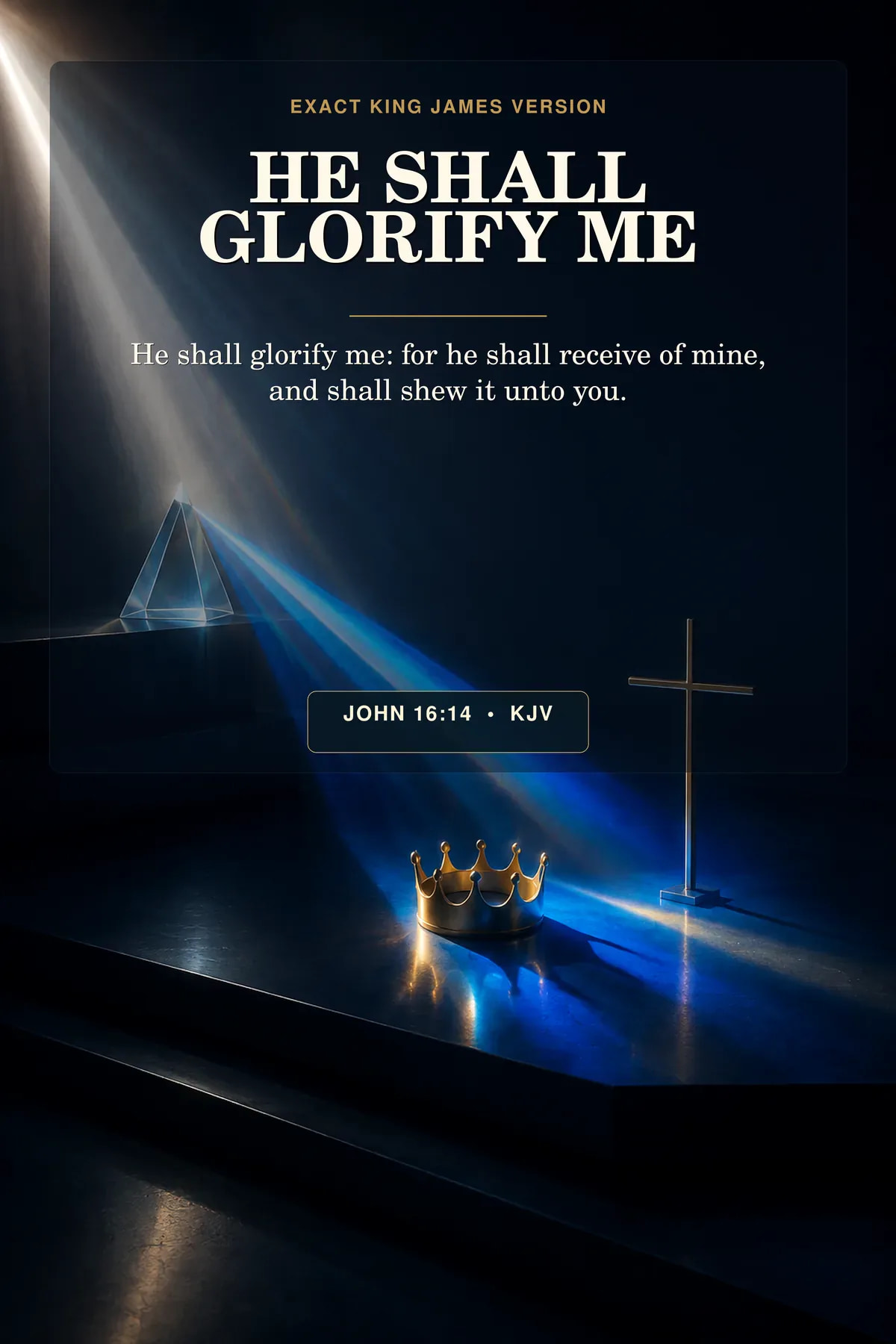
In the home, a visible verse can act as a prompt. The Praise and Worship Scripture art collection pairs six passages with joyful blue, coral, and gold designs. Let the artwork start the practice: open the Bible, read the whole psalm or chapter, and respond in your own words.
Scripture for a Thanksgiving gathering or a gratitude gift
Choose a complete passage first, then decide whether an artwork genuinely helps you remember it. Thanksgiving can mean a particular holiday meal or the ordinary Christian practice of giving thanks. The passages below can serve either setting; none depends on a seasonal color scheme or a new purchase.
| Reading | What to notice | A simple gathering question |
|---|---|---|
| Psalm 100:1–5 | Thanksgiving and praise are directed toward the Lord, whose goodness and mercy ground the psalm | What part of God's character does this reading lead us to acknowledge? |
| 1 Thessalonians 5:16–18 | Rejoicing, prayer, and thanksgiving appear together in instructions to the believing community | Is there something we would like to give thanks for or bring honestly into prayer? |
| Colossians 3:12–17 | Gratitude belongs with patience, forgiveness, love, peace, and the word of Christ in shared life | What small act of patient or thankful service could we practice this week? |
Invite an answer, but let everyone pass. Do not ask a guest to name a blessing publicly if that would expose grief, financial strain, family conflict, or an experience they want to keep private. Giving thanks is not the same as pretending every event was good. A quiet reading and a short prayer may be enough.
Choose artwork honestly for the dining or family room
Two existing TLJ designs can support these themes in different ways:
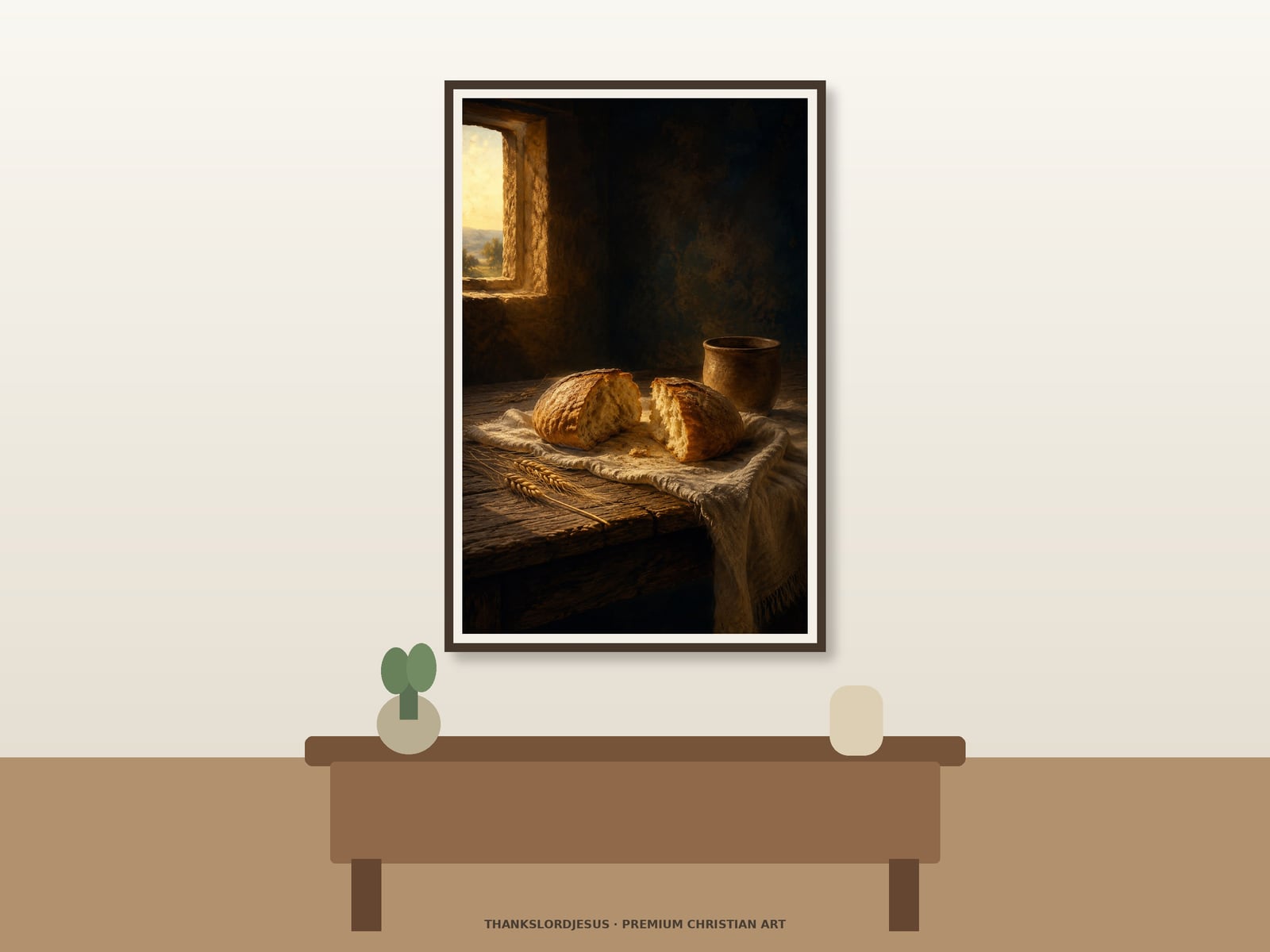
- Give Us This Day Our Daily Bread is a textless painting inspired by Matthew 6:11, showing bread and a cup. It can suit a household reflecting on daily provision. It does not print Psalm 100, a gratitude list, or the words of the Lord's Prayer.
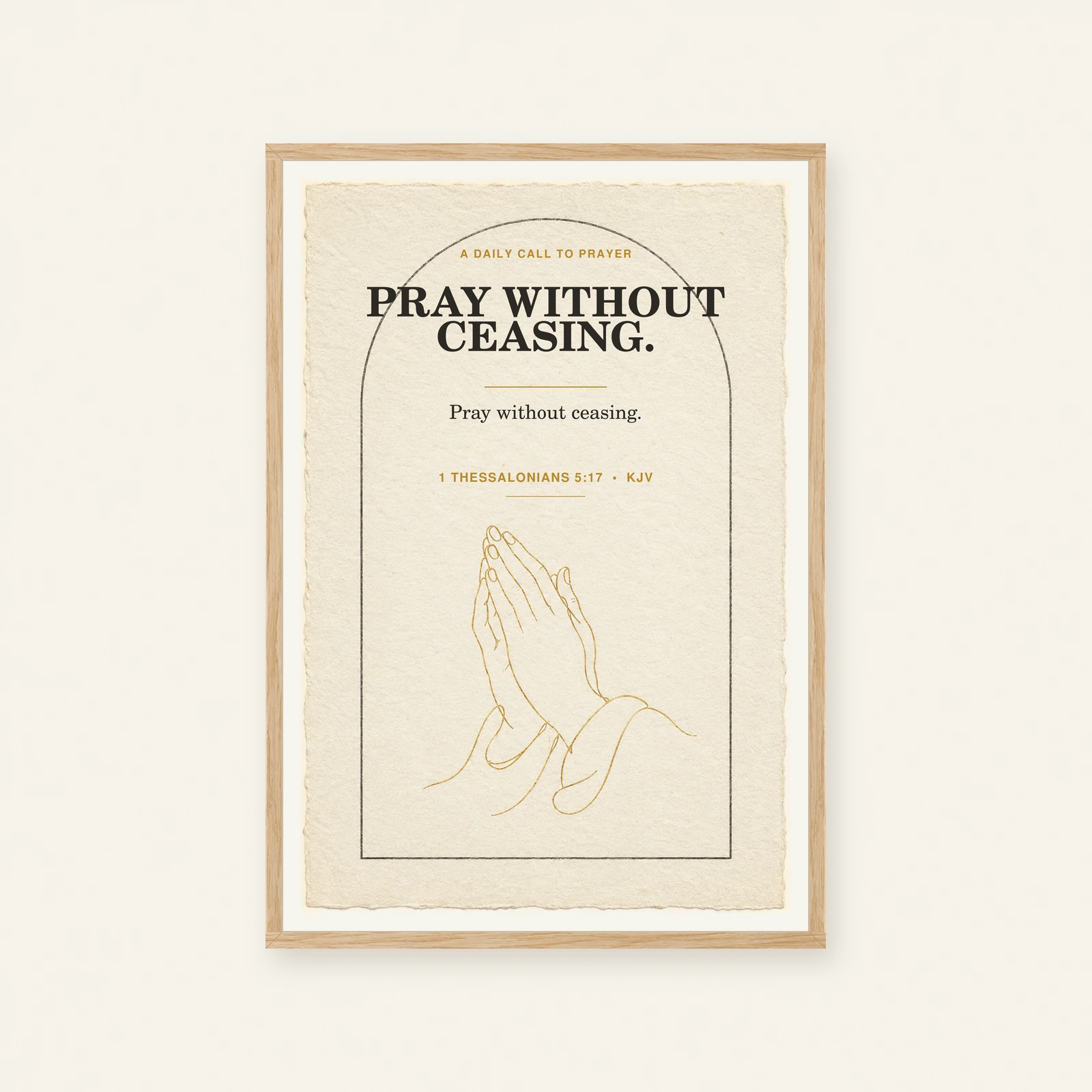
- Pray Without Ceasing — 1 Thessalonians 5:17 is a verse-text option. Read verses 16–18 together when connecting it with gratitude; the individual design is not advertised here as containing all three verses.
For other worship themes, explore the existing Praise and Worship collection. These are year-round Christian artworks that may fit a Thanksgiving setting, not a newly created Thanksgiving product line. Choose one meaningful focal point rather than filling the room with every related passage.
Check the proposed display from a dining chair and from the main doorway. A print placed beyond serving dishes may be harder to see once guests sit down. Keep artwork out of the way of food preparation, splashes, and serving space. If you want the words read aloud, use the Bible; do not assume every guest can read a small frame across the table.
A thoughtful host or hostess gift
Ask whether the host would welcome a print and whether they prefer text or illustration. A small finished item can still create work if they must find a frame or a place for it. Agree on the intended print size or offer to prepare a selected design after the gathering instead of arriving with an unrequested large display.
Add a separate note naming a specific act of hospitality you appreciated. Keep the note personal without adding a new quotation or a name to the artwork. The standard digital license permits finished personal print gifts; it does not authorize sharing the original files or assuming church, group, or commercial permissions. If your printing method requires sending the file to another service, confirm the applicable permission first.
For placement decisions, use the room selection guide. For a new-home occasion, the housewarming gift guide covers the full selection-to-handover process. A suitable passage, a confirmed place, and a sincere note are more useful than adding more items to the gift.
Praise that tells the whole truth
Biblical praise is joyful but not shallow, expressive but not performative, truthful but not cold. It can dance with Psalm 149, kneel with Psalm 95, give thanks with Psalm 100, sing a new song with Psalm 96, and offer a costly confession with Hebrews 13.
Most importantly, praise responds to God as He has made Himself known. Worship does not make Him worthy; it recognizes that He already is. Whether the song is strong or barely whispered, let breath, truth, gratitude, obedience, and hope return to the Lord who gave them.
Related printable Scripture art
Keep this biblical truth in view.

Frequently asked questions
Questions about this topic
What is the biblical difference between praise and worship?+
Praise commonly declares God’s character and works through thanks, testimony, and song. Worship is the broader whole-person response of reverence, allegiance, love, and obedience. They overlap: praise can be worship, and true worship produces praise.
Is worship only singing at church?+
No. Singing is an important biblical form of gathered worship, but Romans 12:1 describes offering the body and life to God as worshipful service. Prayer, listening, giving, serving, obedience, and the church’s ordinances also belong to worship.
What does it mean to worship in spirit and in truth?+
John 4:23–24 teaches that true worship is not secured by a sacred location or outward form. It engages the inner person through the Spirit’s life and conforms to the truth God has revealed, coming to the Father through the Son.
Can I praise God while grieving or depressed?+
Yes, but praise should not deny pain or shame someone who needs help. Biblical lament speaks honestly and still turns toward God’s character. Praise may be a whispered verse, a borrowed church song, or trust expressed while also seeking wise pastoral and professional care.
Which Bible verse is best for praise and worship?+
No single verse contains the whole subject. Psalm 150:6 is a concise call for everything with breath to praise the Lord; John 4:23–24 explains worship in spirit and truth; and Romans 12:1 connects worship with the offered life.
Scripture for your space