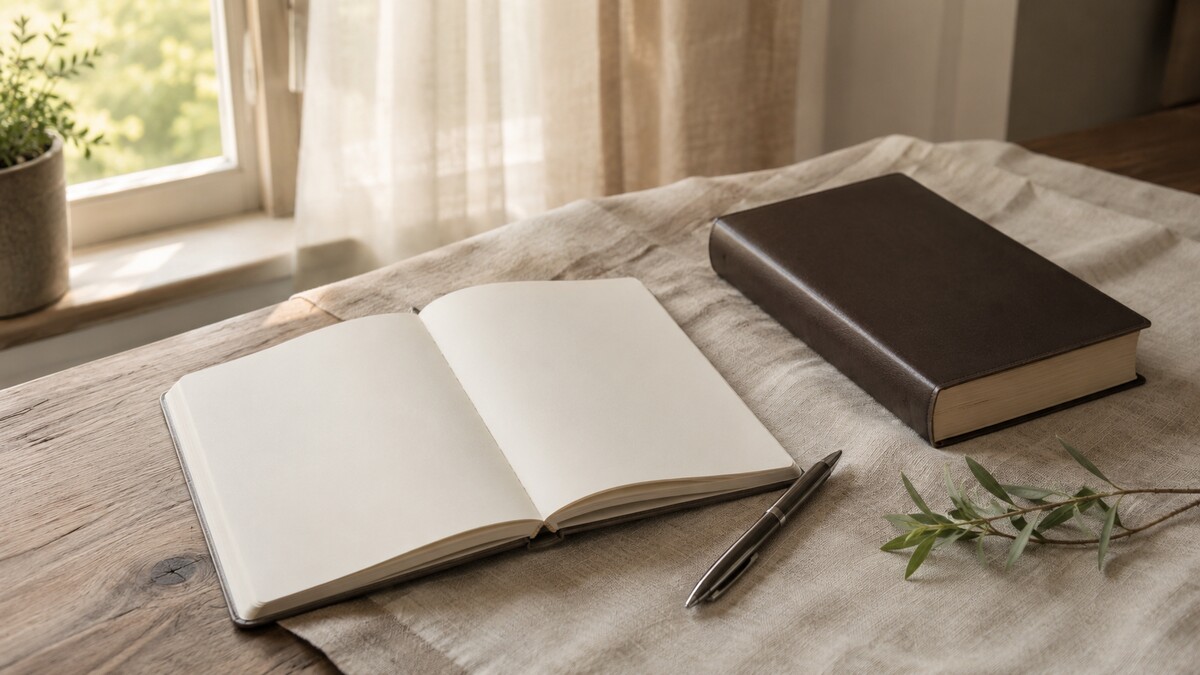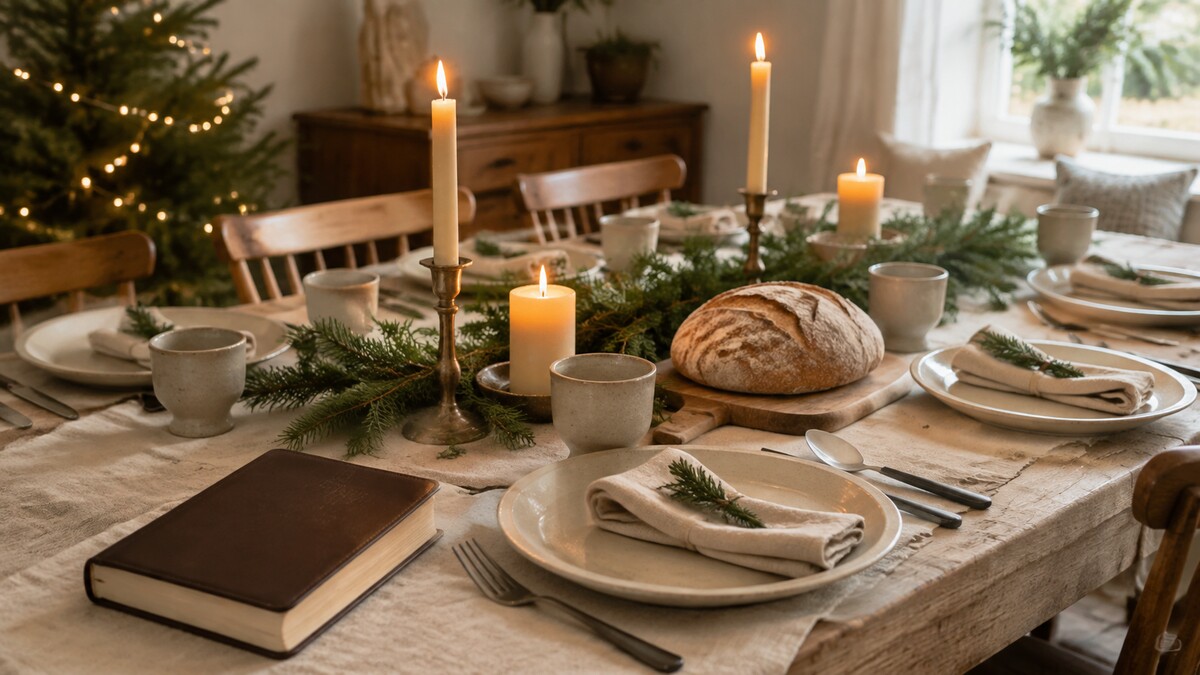
A useful prayer space is quiet, uncluttered, and centered on Scripture. Choose one anchor passage, support it with a few purposeful details, and let the room serve prayer rather than compete for attention.
The best prayer room decor supports attention: it makes Scripture easy to see, reduces visual noise, and gives prayer, reading, and reflection a dependable place in the home. A dedicated room is helpful but not required. A chair beside a window, a small desk, or one wall in a bedroom can become a prayer corner when it is used consistently and arranged with purpose.
Decor does not make prayer effective, and a beautiful room cannot replace honest fellowship with God. Its practical value is simpler: it can remove small distractions, hold the Bible and journal you actually use, and keep a carefully chosen passage within sight.
Begin with the purpose, not the shopping list
Before choosing colors or frames, decide what will happen in the space. Will it be used mainly for quiet morning prayer, family prayer, Bible study, intercession, worship, or pastoral counseling? The answer changes the layout.
- A personal prayer corner may need one supportive chair, a small surface, a reading light, and one anchor print.
- A family prayer area needs comfortable shared seating and Scripture large enough to read from several feet away.
- A church prayer room benefits from durable finishes, clear walking space, and several distinct prayer prompts rather than one highly personal style.
- A Bible-study desk needs task lighting, room for an open Bible, and artwork placed above eye level so it does not compete with the page.
Write the purpose in one sentence. If an object does not serve that purpose or carry genuine meaning, it probably does not need to be in the room.
Choose one anchor Scripture
One clearly readable passage creates more focus than a wall crowded with unrelated quotations. Start with the truth most connected to the room’s purpose.
For stillness and trust
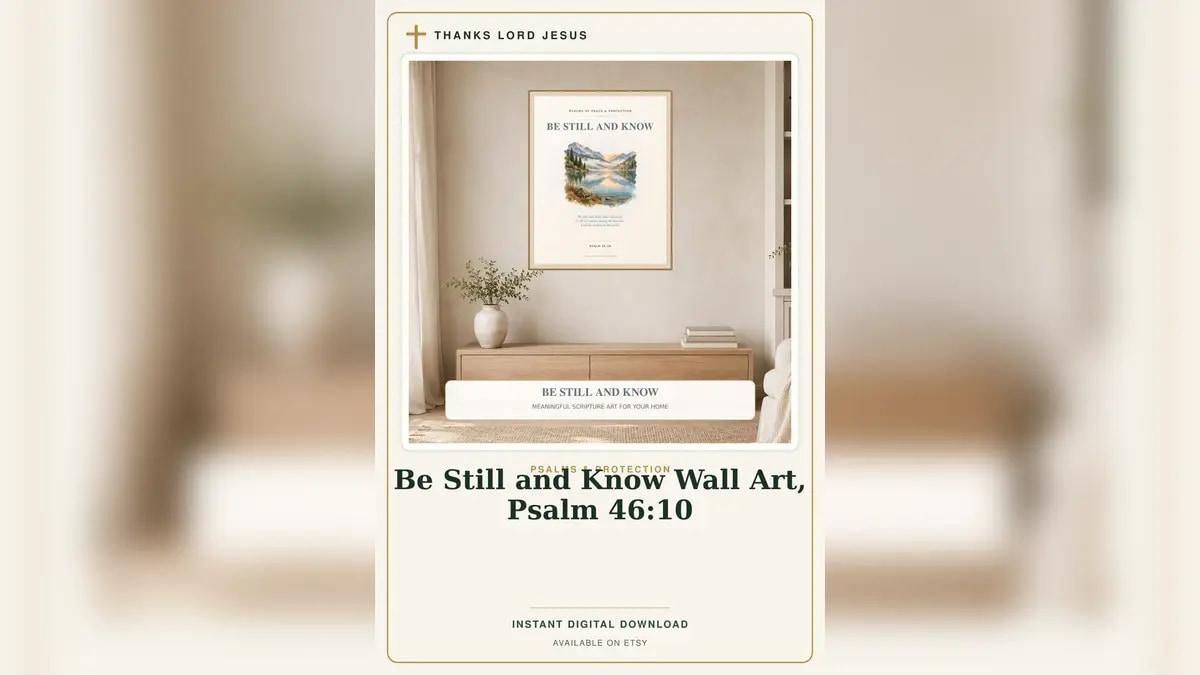
Psalm 46:10 begins, “Be still, and know that I am God” (KJV). In the psalm, stillness is not merely a relaxation technique; it rests in the sovereignty of God amid upheaval. A calm lake or spacious landscape can support that meaning without reducing the verse to a generic wellness slogan. Explore the Psalms of Peace and Protection collection for peaceful, Scripture-led imagery.
For prayer in secret
Matthew 6:6 directs the disciple to pray to the Father in secret rather than perform devotion for human attention. The point is sincerity before God, not a rule that prayer only counts in a literal closet. This passage suits a private prayer corner with restrained typography and little visual clutter.
For continuing prayer
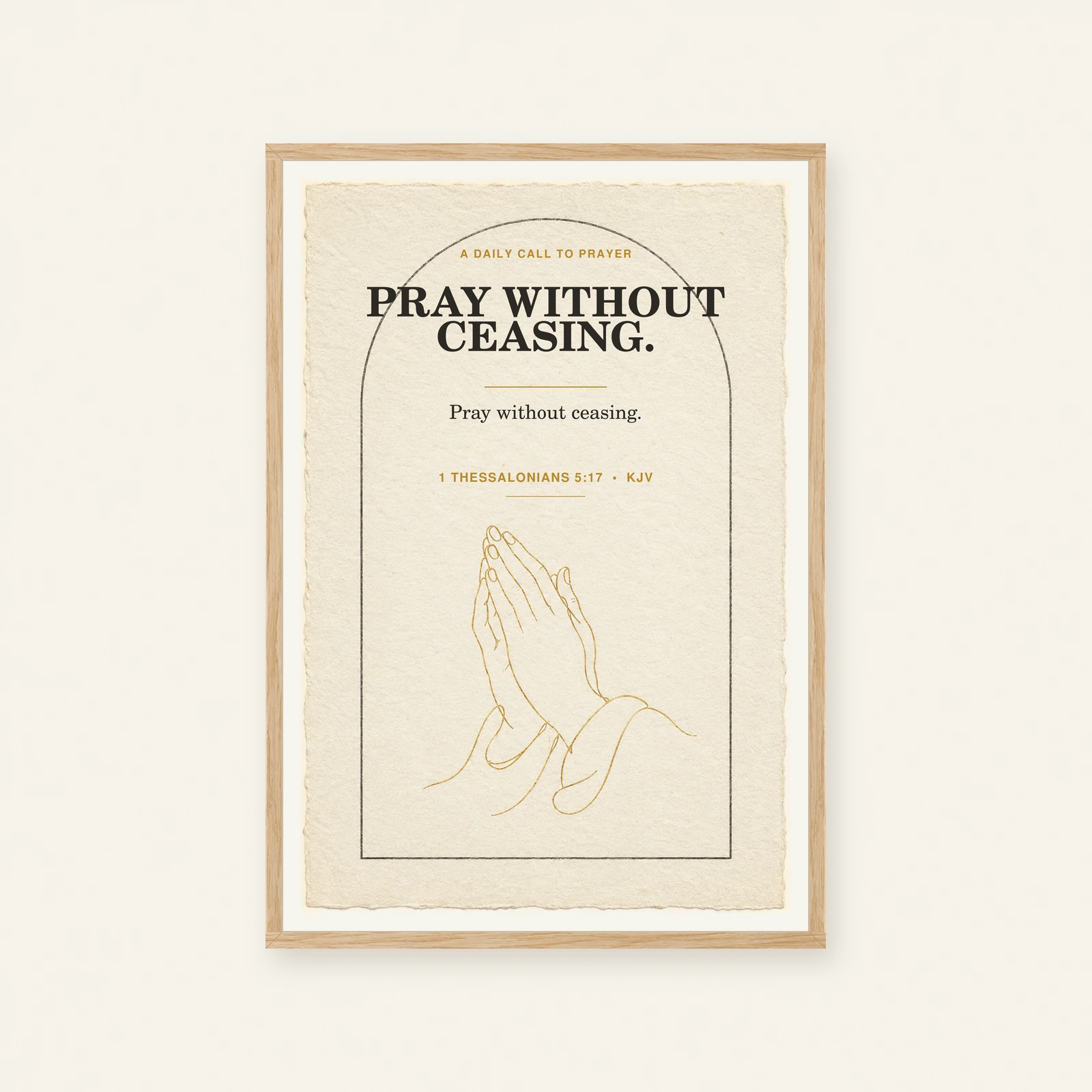
“Pray without ceasing” (1 Thessalonians 5:17, KJV) is short enough for a small desk print. It describes a continuing posture of dependence, not nonstop spoken words. Place it where ordinary work begins so the reminder connects prayer with the whole day.
For peace in anxious seasons
Philippians 4:6–7 joins prayer, supplication, thanksgiving, and the peace of God. It is a strong choice for a bedroom prayer corner or counseling office because the passage neither dismisses anxiety nor promises control over every outcome. It directs the troubled heart toward God.
Build a simple visual hierarchy
A prayer wall needs hierarchy just as a well-designed page does. Choose a primary print, then decide whether anything else is necessary.
- Single-print focus: Use one 16×20 or 18×24-inch print above a chair, console, or narrow desk. This is the quietest arrangement.
- Coordinated pair: Place two related passages at the same size with equal frames. A prayer verse and a peace verse can form a natural sequence.
- Three-print set: Put the strongest design in the center and keep frame size, mat width, and spacing consistent. Sets work best when each design is visibly different but the palette is related.
- Small prayer prompts: Use three or four 5×7 prints on a ledge rather than filling an entire wall. They can be changed as the season of prayer changes.
For a gallery arrangement, leave approximately 2–3 inches between frames and test the composition on the floor first. The center of the group is often comfortable around eye level, but seated viewing and furniture height matter more than a universal rule.
Use color, light, and texture with restraint
Calm does not require an all-beige room. Deep blue can suggest quiet and depth; green can connect the space with growth; warm gold can add light; earth tones can make a study feel grounded. The key is repetition. Choose two main colors and one accent, then repeat them lightly in the art, textile, and one small object.
Use layered light where possible:
- daylight that can be softened with a curtain,
- a warm reading lamp aimed at the Bible rather than the artwork,
- indirect ambient light for evening prayer.
Avoid glare across glass. Matte paper, non-reflective glazing, or a frame placed away from a direct lamp keeps Scripture readable. Natural materials such as linen, wood, wool, or a woven basket add warmth without turning the room into a themed display.
Keep useful prayer tools close
A small basket or drawer can hold a journal, pens, prayer cards, tissues, and a current study book. Keep the Bible visible and easy to open. If music is part of the routine, place a speaker where it can be used without the phone becoming the visual center of the room.
A candle may create atmosphere, but never leave it unattended. In a child-accessible or shared space, a warm battery light is safer. Plants can soften a corner, but choose one that fits the actual light and maintenance available.
Coordinate themes without repeating the same image
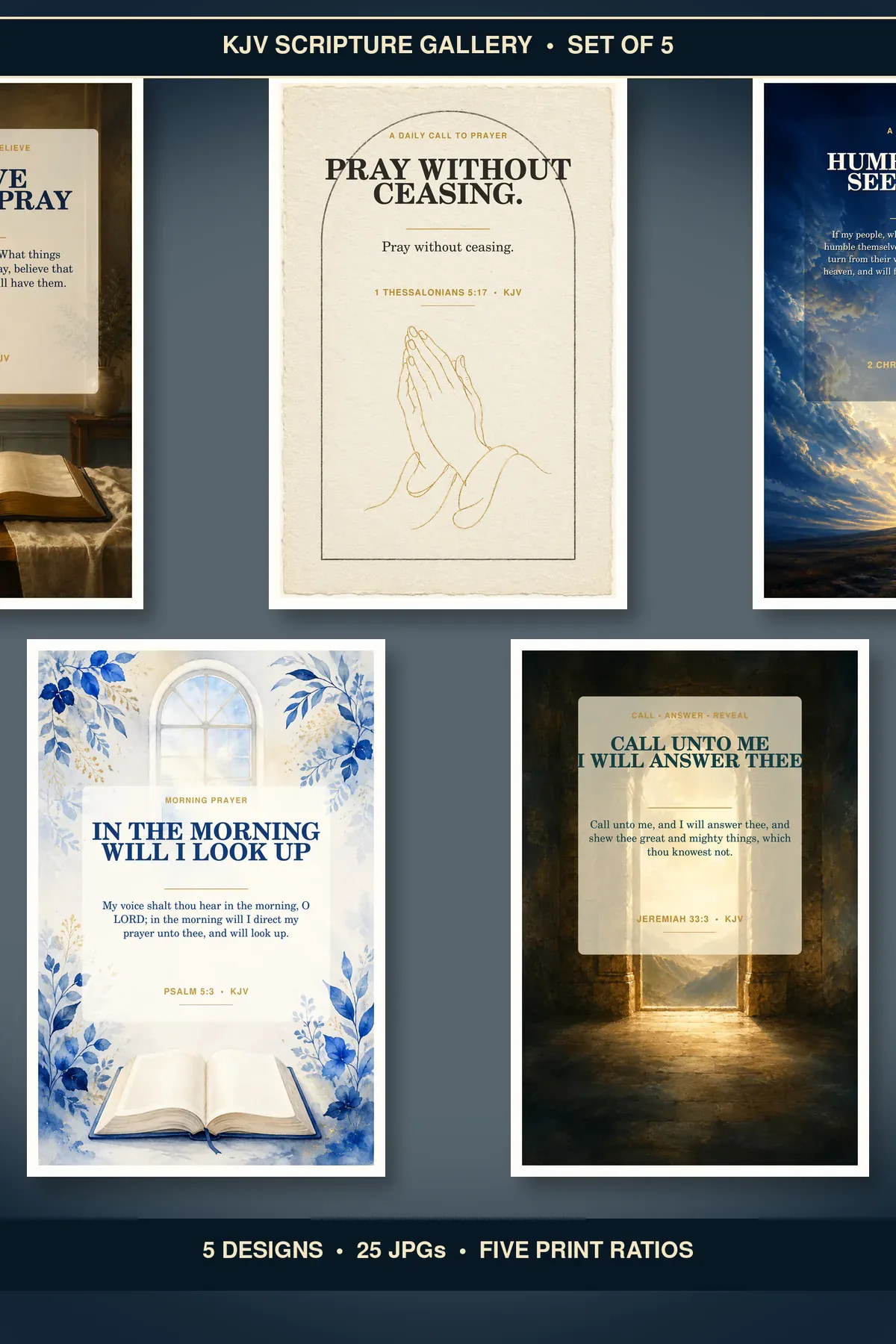
When using a bundle, each design should contribute a different visual idea. A strong prayer-room set might combine:
- an open doorway for calling upon God,
- a morning window for daily prayer,
- a still sea for peace,
- folded hands or an open Bible for devotion,
- a mountain or stronghold for intercession and courage.
Repeating the same dove, ray of light, or nearly identical landscape weakens the set. Related color and typography are enough to create unity; the scenes should remain immediately distinguishable.
For symbolic studies of dove, wind, fire, living water, comfort, and power, browse the Holy Spirit printable art collection. For passages about standing firm, connect the room to the Armor of God collection and the Ephesians 6 study.
Print prayer room wall art correctly
Confirm the frame’s specified print size before printing; the visible mat opening and the outside frame dimensions are different measurements. An 8×10-inch print uses a 4:5 ratio; 12×18 uses 2:3; 12×16 uses 3:4; 11×14 uses its own proportion. Choosing the matching file preserves the composition and keeps verse text away from accidental cropping.
Heavy matte paper is a dependable choice for readable Scripture and low glare. Print one inexpensive test, check the smallest text from the normal viewing distance, and compare the print under the room’s daytime and evening light. The digital wall art printing guide explains ratios, paper, printer settings, and professional services step by step.
Plan one usable prayer corner before buying more art
Use what the room already offers. The following are planning examples, not photographs of customer homes or claims about a completed TLJ room.
| Space you have | First layout to test | What to check from the prayer position |
|---|---|---|
| A chair beside a small table | One print in your normal line of sight; Bible on the table | Readable wording while seated and no lamp reflection over the text |
| A shared desk | One modest print outside the open-book area | Enough surface for the Bible and notebook; room for the other user's belongings |
| A family sitting area | One readable anchor passage, with other items kept secondary | The smallest reader can see the reference; the display does not crowd the seating area |
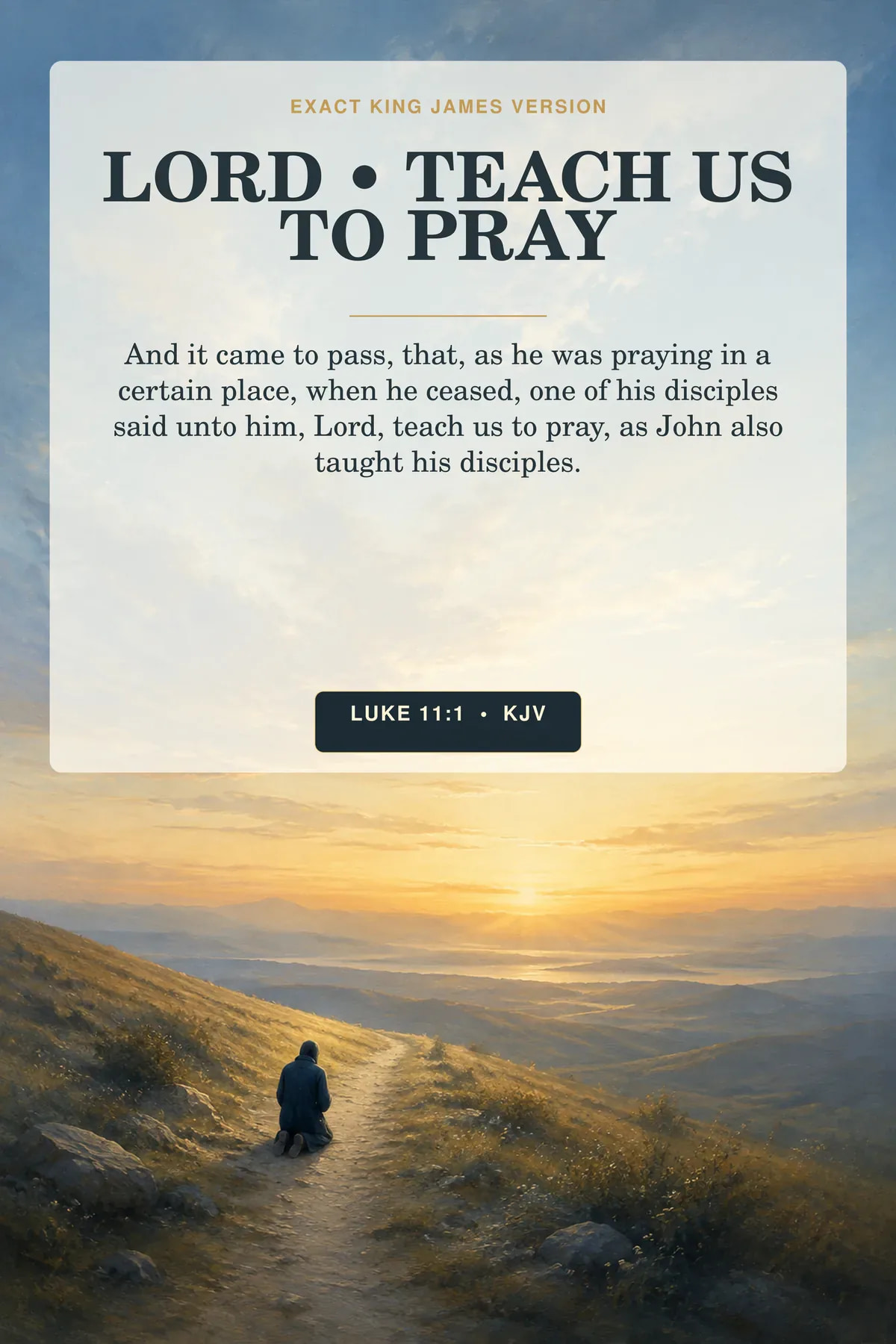
For a short daily reminder, consider Pray Without Ceasing — 1 Thessalonians 5:17. For a learning-and-prayer theme, consider Lord Teach Us to Pray — Luke 11:1. Read each passage in context instead of treating either print as a condition for effective prayer.
Browse the Prayer Room collection after deciding where the print will go. Use the Room and Scripture Art Worksheet to record your own arrangement. One suitable print is enough to start; extra designs should have a clear purpose.
Refresh a prayer corner for winter or a new year
Refresh the part that makes the corner harder to use before adding more decor. A reading lamp in the wrong place, a surface covered with seasonal objects, or a frame hidden by furniture may matter more than the age of the artwork. The goal is a usable place for Scripture and prayer, not a promise of a more successful year.
Try the corner at the time you normally use it. In darker mornings or evenings, check the open Bible and the framed text separately. Light can help the page while creating glare on the artwork. Move the lamp or frame and check again before buying replacement paper or glazing.
| What you notice | Try first | Consider a different print only if… |
|---|---|---|
| The surface has become crowded | Put away objects you do not use for prayer or reading | The remaining artwork still has no clear purpose |
| The verse is hard to read while seated | Test another position at the actual viewing distance | The text remains too small or low in contrast |
| You want to remember a passage for a new season | Read it in context and note why it matters | The passage is one you want to live with beyond a few days |
| A shared room has several competing uses | Define a small area that can be cleared and used consistently | A single print would help mark that area without taking over the room |
Pray Without Ceasing — 1 Thessalonians 5:17 offers a concise reminder of continuing prayer. Lord Teach Us to Pray — Luke 11:1 turns attention to the disciples' request to Jesus. These are separate designs; this guide does not turn them into a new bundle or promise that either changes the effectiveness of prayer.
For a gift, ask whether the recipient wants a new print at all. A winter prayer-corner gift should not create a task they did not request. Let them choose the passage and intended size, then prepare the finished personal print in a way permitted by the product license. Do not assume ministry use or a shared church prayer room is covered by ordinary personal-use terms.
Write one sentence beside your plan: “I want this corner to help me ______.” Keep the sentence about a practice you can choose—reading, praying, or remembering a passage—rather than a result an object is supposed to guarantee. Browse Prayer Room Decor after deciding what would actually help. The room planning worksheet can keep the passage, display position, and frame measurements together.
A final prayer-room checklist
- The verse is accurate, referenced, and readable from the place where you pray.
- The passage has been chosen for its biblical meaning, not only for a decorative phrase.
- The room has a clear purpose and comfortable place to sit or kneel.
- Lighting serves reading without creating glare.
- The wall has one focal point rather than many competing messages.
- Journals and prayer tools are nearby but contained.
- Every print in a set has a clearly different scene.
- Digital files match the intended frame ratios before printing.
The goal is not a perfect photograph of a prayer room. It is a faithful place you will return to. Let the arrangement become quiet enough for the Word to remain central, then allow the habit of prayer—not the decor—to give the space its life.
Related printable Scripture art
Keep this biblical truth in view.
Frequently asked questions
Questions about this topic
Do I need a separate room to create a prayer space?+
No. A chair, small desk, closet corner, bedroom wall, or quiet part of a living room can work. Consistent use, readable Scripture, and fewer distractions matter more than square footage.
What Bible verse is best for prayer room wall art?+
Choose according to the room’s purpose. Matthew 6:6 suits private prayer, 1 Thessalonians 5:17 supports a daily prayer rhythm, Philippians 4:6–7 connects prayer with peace, and Psalm 46:10 centers stillness on God’s sovereignty.
How many prints should a prayer wall have?+
One strong print is often enough. A pair or coordinated set of three can work when the passages relate, the frames are consistent, and each design has a clearly different scene. Readability and focus matter more than filling the wall.
What paper is best for printable prayer room art?+
Heavy matte paper is a versatile choice because it reduces glare and keeps typography readable. Always check the printer’s supported paper weight and print a small test before ordering several large copies.
Scripture for your space