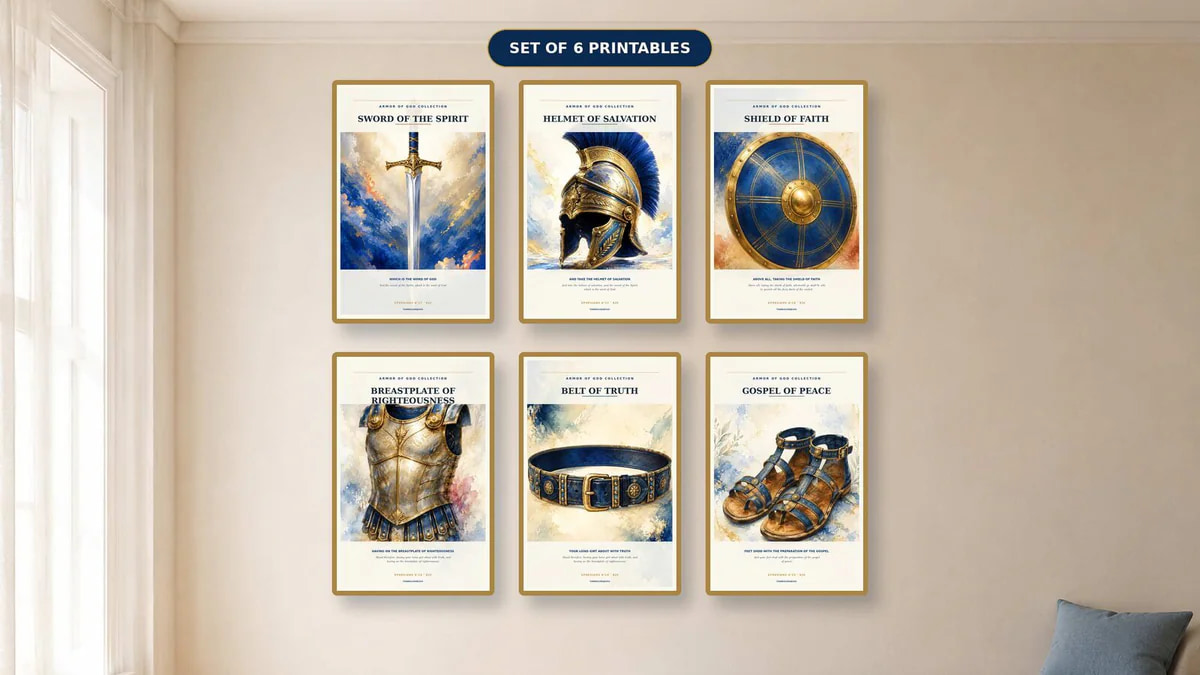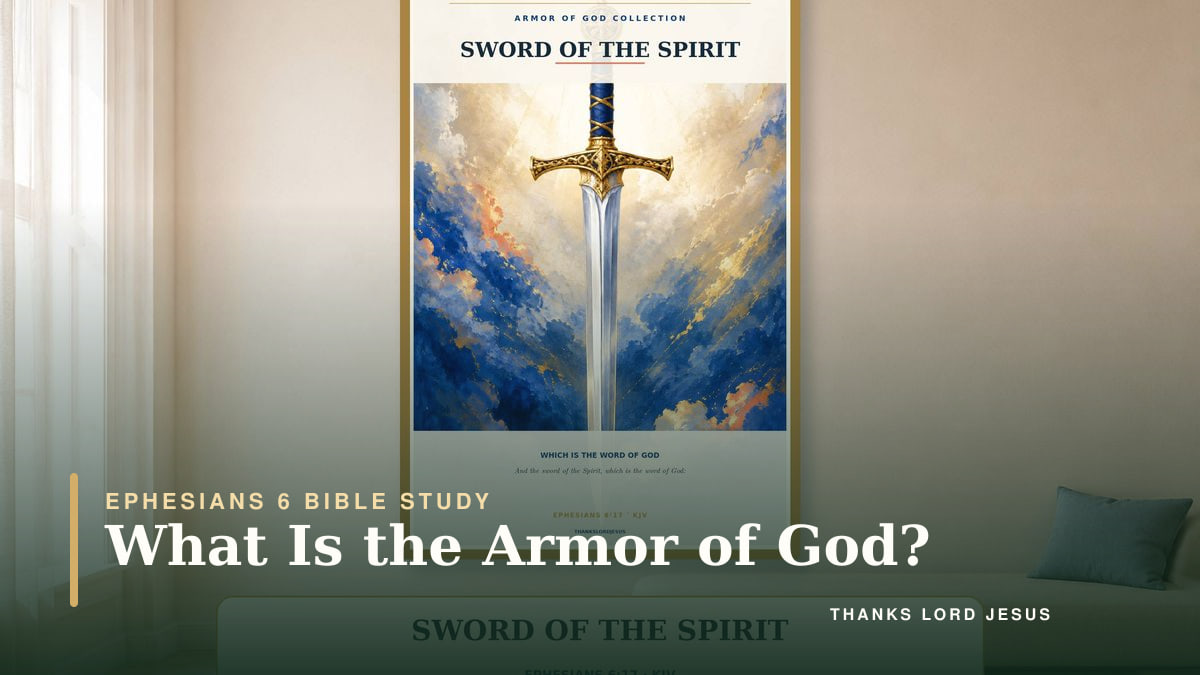
A clear, practical guide to the whole armor of God in Ephesians 6:10–18—what each piece means, why believers need it and how to put it on each day.
The armor of God is Paul’s picture of the spiritual resources God gives believers to remain faithful to Jesus through temptation, fear, accusation and deception. He begins, “be strong in the Lord” (Ephesians 6:10, KJV). The strength comes from God.
This passage is often illustrated with a Roman soldier because Paul describes a belt, breastplate, footwear, shield, helmet and sword. Yet the point is not fascination with military equipment. Every piece directs us back to God’s truth, righteousness, gospel, faithfulness, salvation and Word. The armor is a vivid way of describing a life that is rooted in Christ and dependent on the Holy Spirit.
The context of Ephesians 6:10–18
Paul’s instruction comes near the end of Ephesians. Earlier chapters celebrate what God has done through Christ: believers are saved by grace through faith (Ephesians 2:8–9) and brought near by Christ’s blood (Ephesians 2:13). Paul then calls them to “walk worthy” of that calling (Ephesians 4:1).
The armor passage therefore is not a technique for earning salvation. It is an appeal to stand in the grace and calling already given in Christ. Paul repeats the idea of standing: believers are to withstand in the evil day and, “having done all, to stand” (Ephesians 6:13, KJV).
He also clarifies the nature of the conflict. “We wrestle not against flesh and blood” (Ephesians 6:12, KJV). Other people are not the enemy. Christians should not use spiritual-warfare language to condemn, fear or mistreat human beings. Our response is truth, righteousness, peace, faith, salvation, Scripture and prayer—not hatred or retaliation.
What are the pieces of the armor of God?
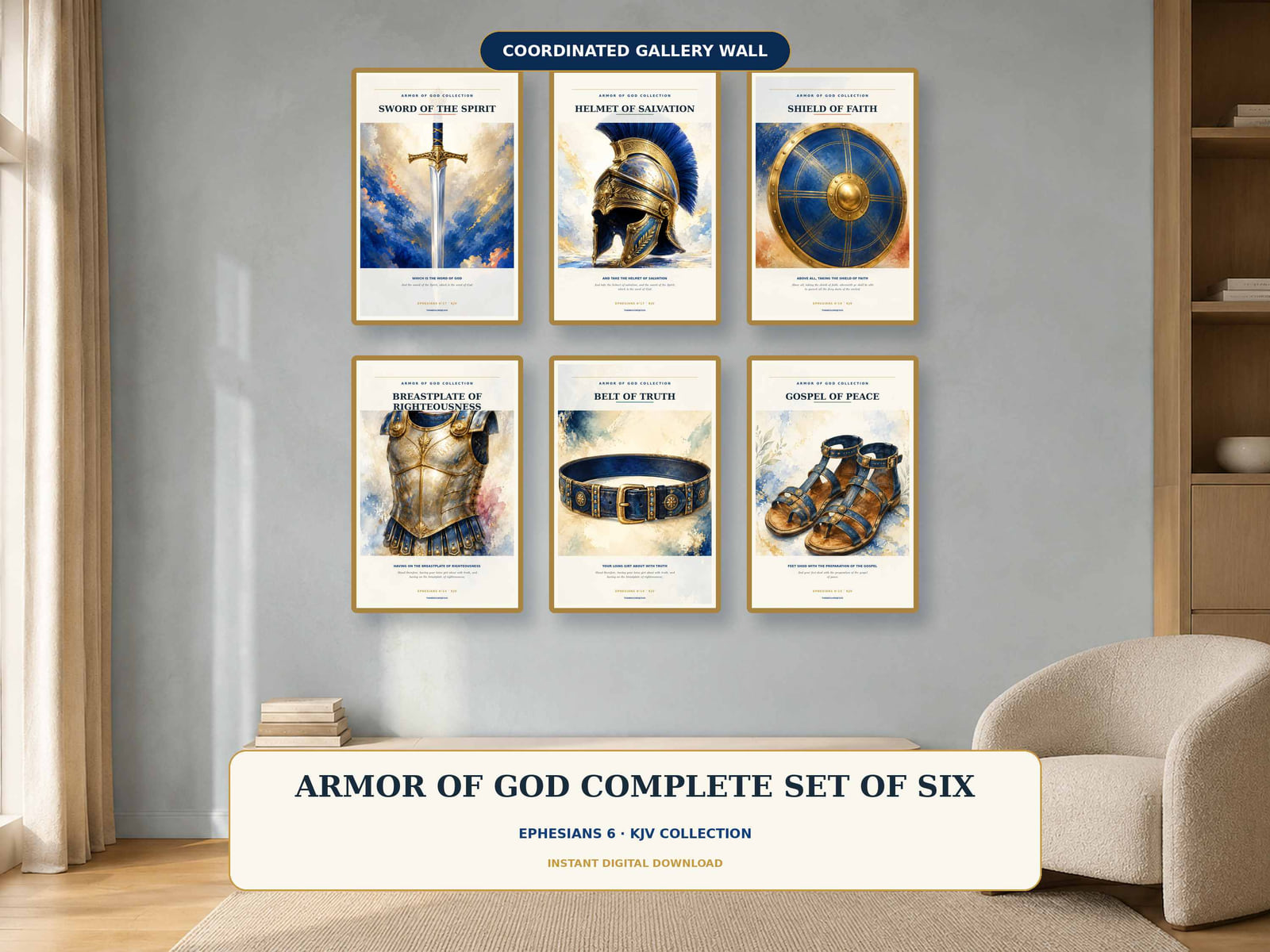
Paul names six pieces of armor and then immediately emphasizes continual prayer. Each piece belongs together; the instruction is to put on the whole armor of God.
1. The belt of truth
Paul begins: “having your loins girt about with truth” (Ephesians 6:14, KJV). A soldier’s belt gathered loose clothing and helped him move without being hindered. In the same way, truth gives stability and readiness to a believer’s life.
This includes God’s truth in Scripture, especially the gospel, and a life of honesty. Jesus identifies Himself with truth in John 14:6. When lies say that God has abandoned us, that sin does not matter or that failure places us beyond grace, His truth corrects them.
Putting on the belt of truth means learning what God has said, rejecting deception and choosing integrity even when dishonesty seems easier.
2. The breastplate of righteousness
The breastplate covered a soldier’s vital organs. Paul writes of “the breastplate of righteousness” (Ephesians 6:14, KJV). Christians stand before God through Christ, not through a record of flawless performance. Paul teaches elsewhere that believers are made righteous in Christ (2 Corinthians 5:21). That gift produces a practical life of obedience and holiness.
Self-righteousness cannot protect the heart, and careless living invites compromise. Under accusation, believers rest in what Christ has done; under temptation, they live in agreement with their new identity.
Putting on the breastplate means trusting Christ rather than boasting in yourself, then choosing what is right because you belong to Him.
3. Feet prepared with the gospel of peace
Paul describes feet “shod with the preparation of the gospel of peace” (Ephesians 6:15, KJV). Good footwear gave a soldier steadiness and readiness. The gospel gives believers a firm foundation: through Jesus, sinners can be reconciled to God by grace.
Romans 5:1 connects justification by faith with peace with God. Because this relationship rests on Christ, believers can enter uncertain places without being ruled by panic and can carry good news to others with gentleness.
Putting on this readiness means remembering the gospel, walking as a peacemaker and being prepared to explain the hope found in Jesus.
4. The shield of faith
Paul says, “Above all, taking the shield of faith” (Ephesians 6:16, KJV). He explains that this shield quenches “the fiery darts of the wicked.” Those darts may take the form of temptation, fear, doubt, condemnation or distorted thoughts about God.
Faith is not confidence in positive thinking. It is reliance on the trustworthy God revealed in Scripture. A shield only helps when it is taken up; likewise, biblical truth is meant to be trusted in real moments of pressure. Faith says that God remains faithful when feelings fluctuate and circumstances are unclear.
Putting on the shield means bringing each fear or temptation under God’s character and promises. Christians were not meant to struggle alone; prayer and faithful fellowship help us keep believing.
5. The helmet of salvation
The helmet guards the head. Paul commands believers to “take the helmet of salvation” (Ephesians 6:17, KJV). Salvation gives a new foundation for the mind: we belong to Jesus, have been rescued by grace and live in hope of His final restoration.
The helmet does not mean pretending sin is harmless. It means confessing honestly while refusing to make condemnation our identity. Romans 8:1 declares no condemnation for those in Christ; the gospel teaches us to repent without surrendering hope.
Putting on the helmet means renewing the mind with the truth of salvation, remembering whose you are and directing your hope toward Christ.
6. The sword of the Spirit, the Word of God
Paul identifies the final piece plainly: “the sword of the Spirit, which is the word of God” (Ephesians 6:17, KJV). Jesus modeled faithful use of Scripture when He answered temptation with God’s written Word in Matthew 4:1–11.
Scripture is not for humiliating people. It exposes lies, guides obedience, reveals Christ and equips believers for good work (2 Timothy 3:16–17). Because verses can be misused outside their context, Christians should learn the Bible patiently and prayerfully.
Putting on the sword means reading Scripture in context, storing it in the heart and applying it with the character of Jesus. The sword belongs to the Spirit; we depend on Him to illuminate and apply the Word faithfully.
Is prayer part of the armor of God?
Prayer is not given a piece-of-armor label, but it is inseparable from the entire passage. Paul continues, “Praying always with all prayer and supplication in the Spirit” (Ephesians 6:18, KJV). Prayer is the posture in which every piece is received and used.
Paul calls for persevering prayer for all saints. Spiritual warfare is not only personal: we pray for the church, those under pressure and gospel workers. Prayer keeps the armor from becoming a self-help formula.
How to put on the armor of God each day
The Bible does not prescribe a required script or ritual. A spoken morning prayer can be helpful, but the armor describes an ongoing way of living. You might begin the day like this:
- Truth: Read a passage of Scripture and ask what it reveals about God, the gospel and faithful living.
- Righteousness: Thank Jesus for His grace, confess known sin and choose obedience in the decisions before you.
- Peace: Remember that you have peace with God through Christ and ask for readiness to carry His peace to others.
- Faith: Name your fears and deliberately entrust them to God’s character and promises.
- Salvation: Reject condemnation and renew your mind in your identity and hope in Christ.
- The Word: Keep one properly understood verse or truth ready to answer a recurring temptation.
- Prayer: Pray in dependence on the Spirit for yourself and for other believers.
The goal is not anxious self-protection. It is steady communion with God. We put on His armor because He is faithful, and we stand because He supplies what we need.
Key takeaways
- The armor of God is God’s provision, not human willpower.
- The conflict is spiritual; people are not the enemy.
- Truth, righteousness, peace, faith, salvation and Scripture work together.
- Prayer surrounds the entire life of spiritual readiness.
- Putting on the armor is a daily pattern of trusting Christ, obeying His Word and depending on the Spirit.
A final encouragement
The repeated command in Ephesians 6 is simple: stand. You do not stand alone, and you do not stand in your own strength. God gives truth for confusion, righteousness for accusation, peace for uncertain paths, faith for fiery darts, salvation for the mind, Scripture for deception and prayer for every moment.
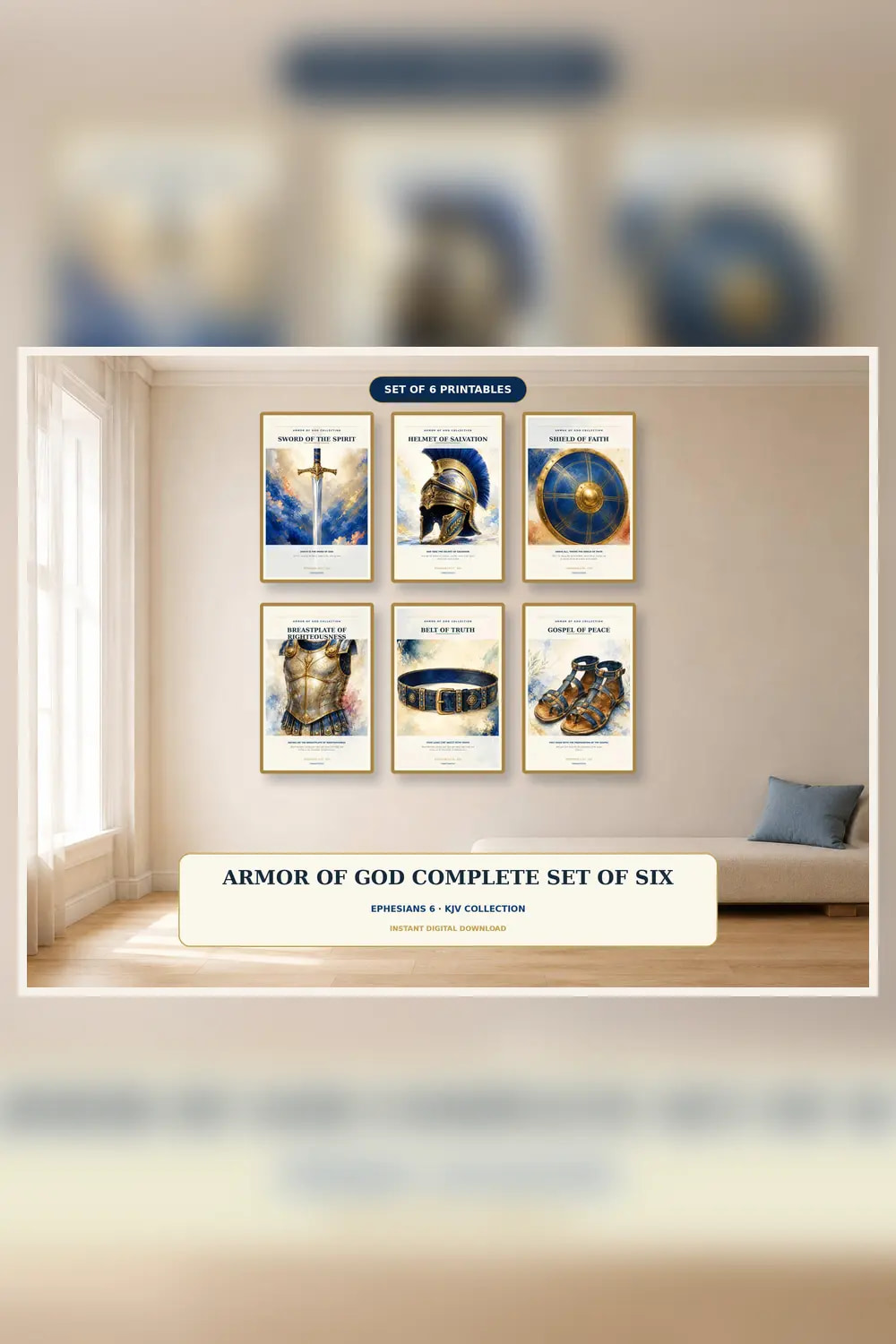
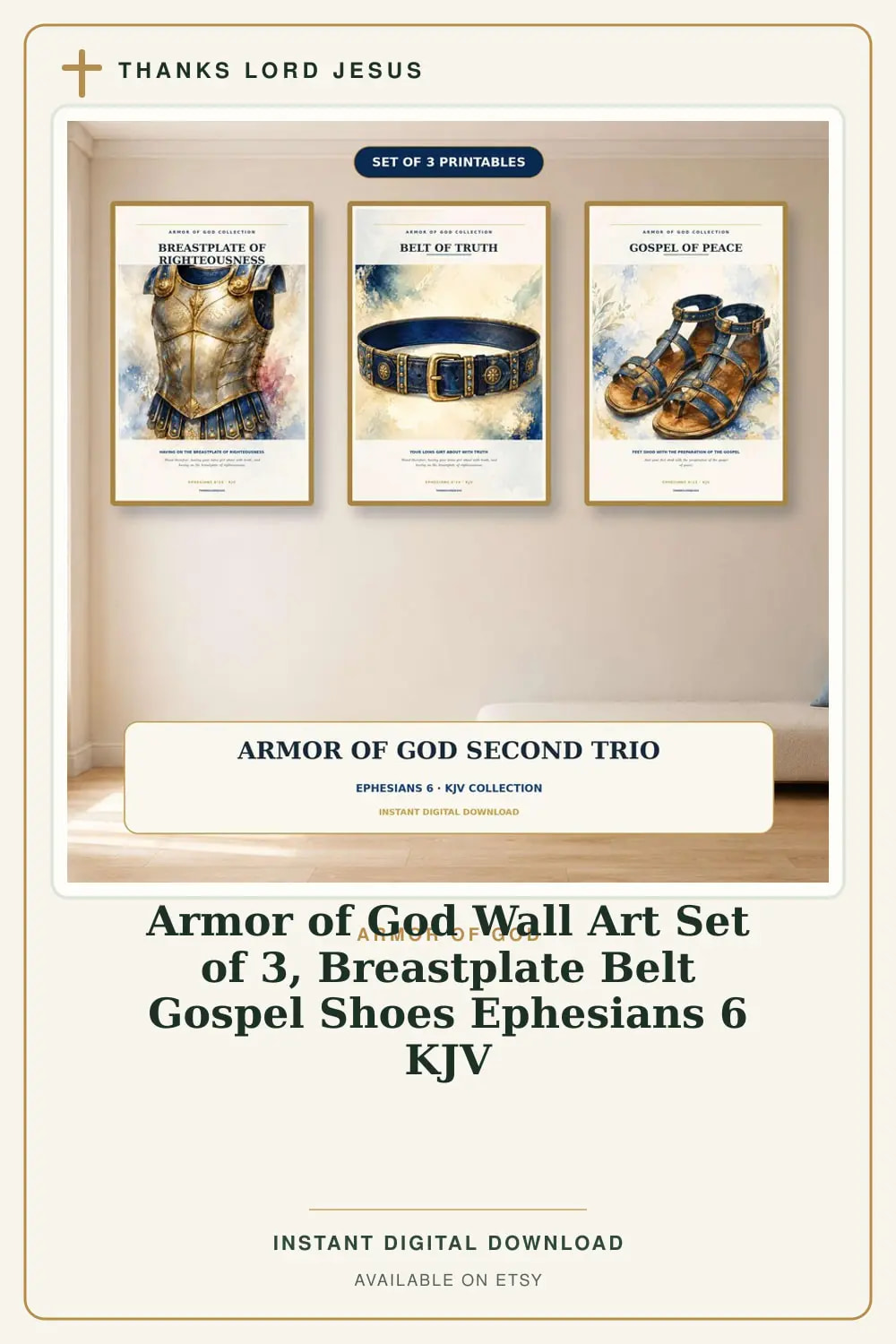
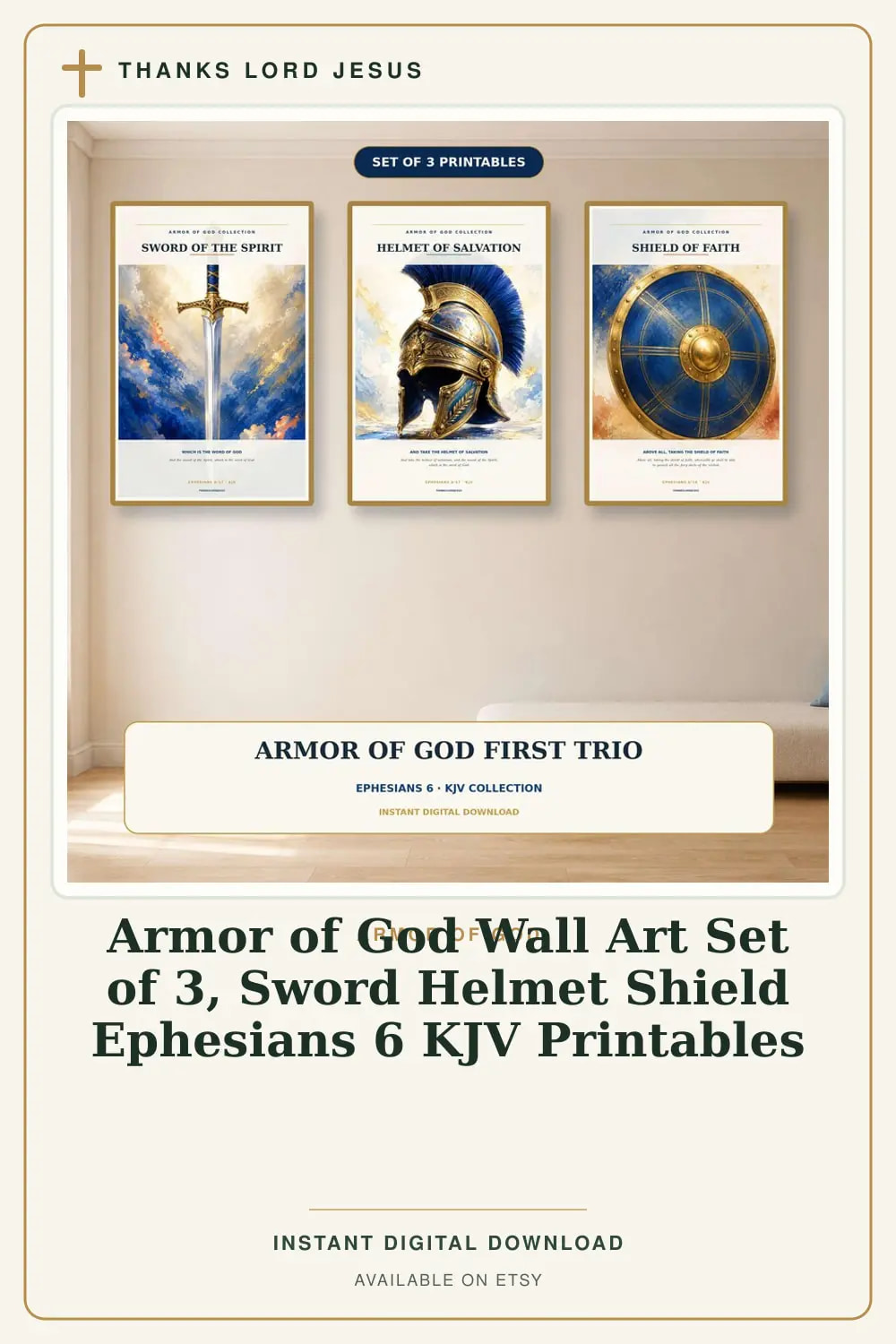
Keep Ephesians 6 open this week. Read it slowly, receive what Christ has provided and ask the Holy Spirit to make its truth visible in your choices. If a printable reminder would serve your home, you can also Explore Armor of God Printables without pressure—the purpose of every design is to turn attention back to God’s Word.
Related printable Scripture art
Keep this biblical truth in view.
Frequently asked questions
Questions about this topic
How many pieces are in the armor of God?+
Ephesians 6:14–17 names six: the belt of truth, breastplate of righteousness, gospel footwear, shield of faith, helmet of salvation and sword of the Spirit. Prayer follows immediately in verse 18 and is essential, although Paul does not call it a seventh piece.
Is the armor of God only for adults?+
No. Every believer needs truth, faith, the gospel, salvation, righteousness, Scripture and prayer. Children can learn these truths in age-appropriate language, while adults help them understand that the armor is spiritual rather than a magical costume.
Do I need to say a special prayer to put on the armor?+
Scripture gives no mandatory formula. It is good to pray through Ephesians 6, but the deeper emphasis is a continuing life of truth, faith, obedience, gospel readiness, biblical thinking and prayerful dependence on God.
Does wearing the armor mean Christians will avoid hardship?+
No. Paul speaks about withstanding an “evil day” (Ephesians 6:13). The promise is not an easy life but God’s sufficient provision to remain faithful in difficulty.
Can Armor of God art help teach the passage?+
Visual art can serve as a meaningful reminder when it points back to Scripture rather than replacing it. Explore our Armor of God printable collection for faith-centered designs created for homes, prayer spaces and children’s rooms.
Scripture for your space