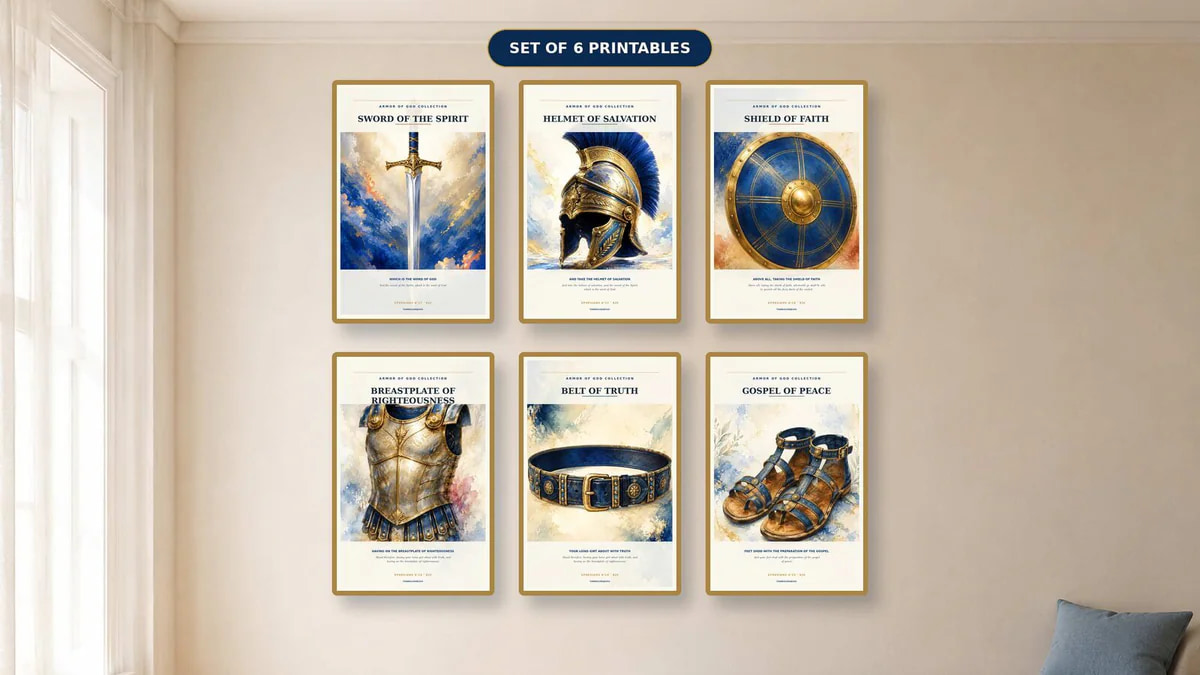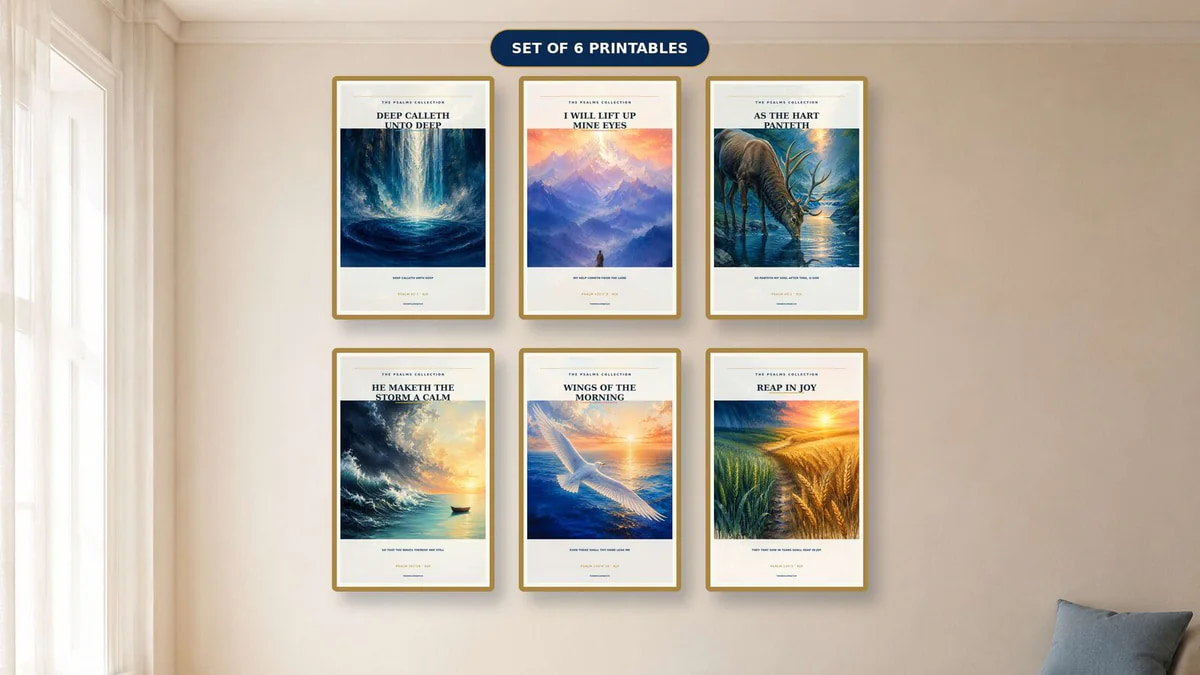
Jesus Christ wall art should make the person and words of Christ clearer, whether the theme is an I AM statement, the cross, resurrection, shepherding, kingship, or promised return.
Choose Jesus Christ wall art by the aspect of the Gospel you want the room to remember, then test every visual choice against the words and work of Christ. A cross, shepherd, crown, empty tomb, open door, bread, vine, lamp, sea, or white horse can each serve a biblical theme. None should be used merely because it looks religious.
Begin with one clear Gospel theme
The I AM statements
John records Jesus' statements about the bread of life, light of the world, door, good shepherd, resurrection and life, way/truth/life, and true vine. A complete seven-piece set can teach the sequence well, but only when every component has its own scene. Bread, lamp, doorway, shepherd field, opened tomb, path, and vine are naturally distinct. Seven nearly identical portraits with changed captions miss the opportunity.
The cross and atonement
Cross-centered art should avoid reducing the crucifixion to an abstract victory icon without cost, obedience, and love. Short Gospel passages or New Testament teaching can anchor the image. A restrained cross silhouette, torn veil, hill, or crown of thorns can be powerful when the verse remains primary.
Resurrection and living hope
Empty-tomb, dawn, and garden imagery suits Easter and year-round Christian homes. Check that the listing distinguishes the Gospel account being quoted and gives the correct reference. Bright light alone is not enough; the verse tells the viewer why the dawn matters.
Shepherd, King, and returning Lord
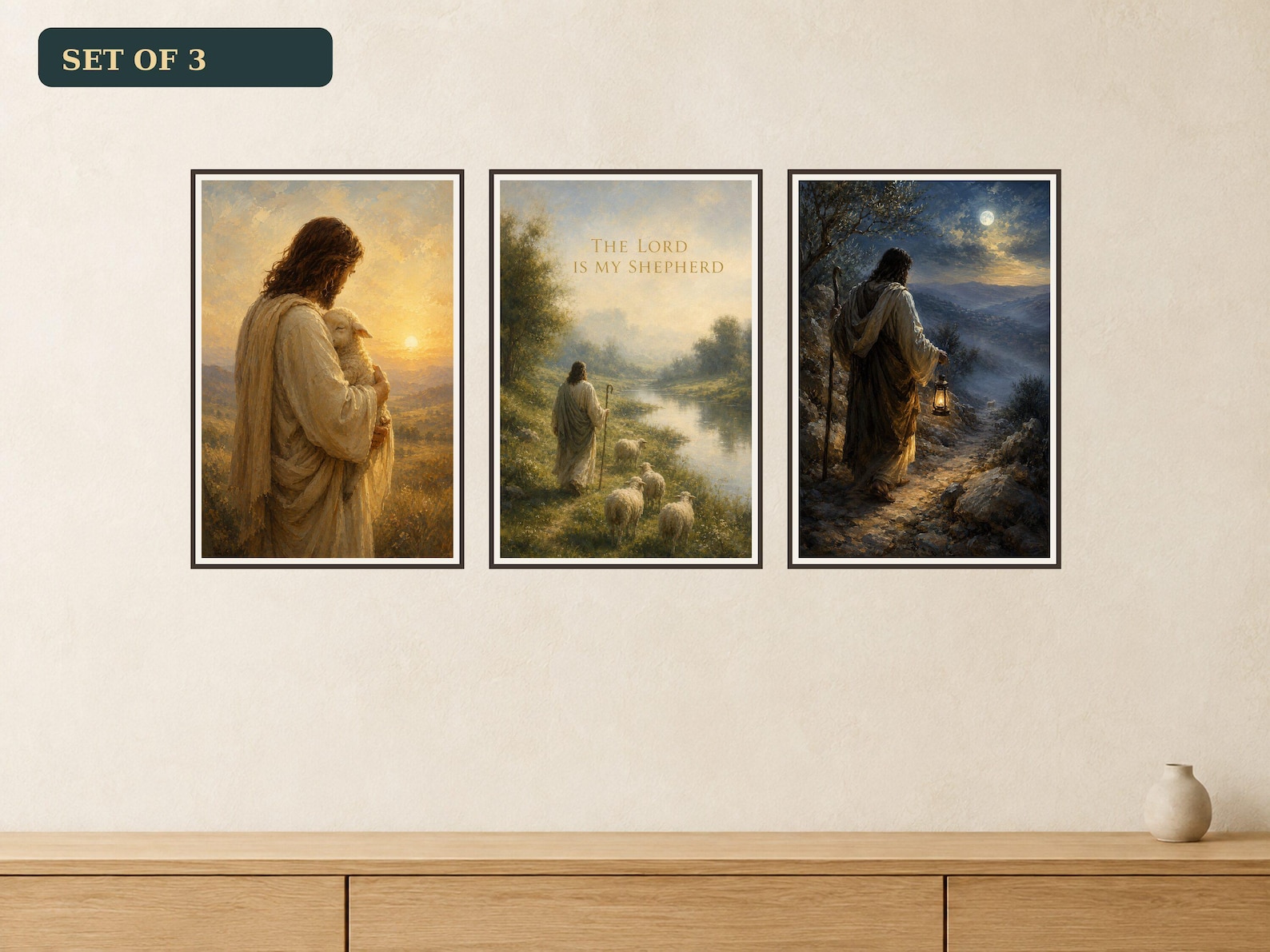
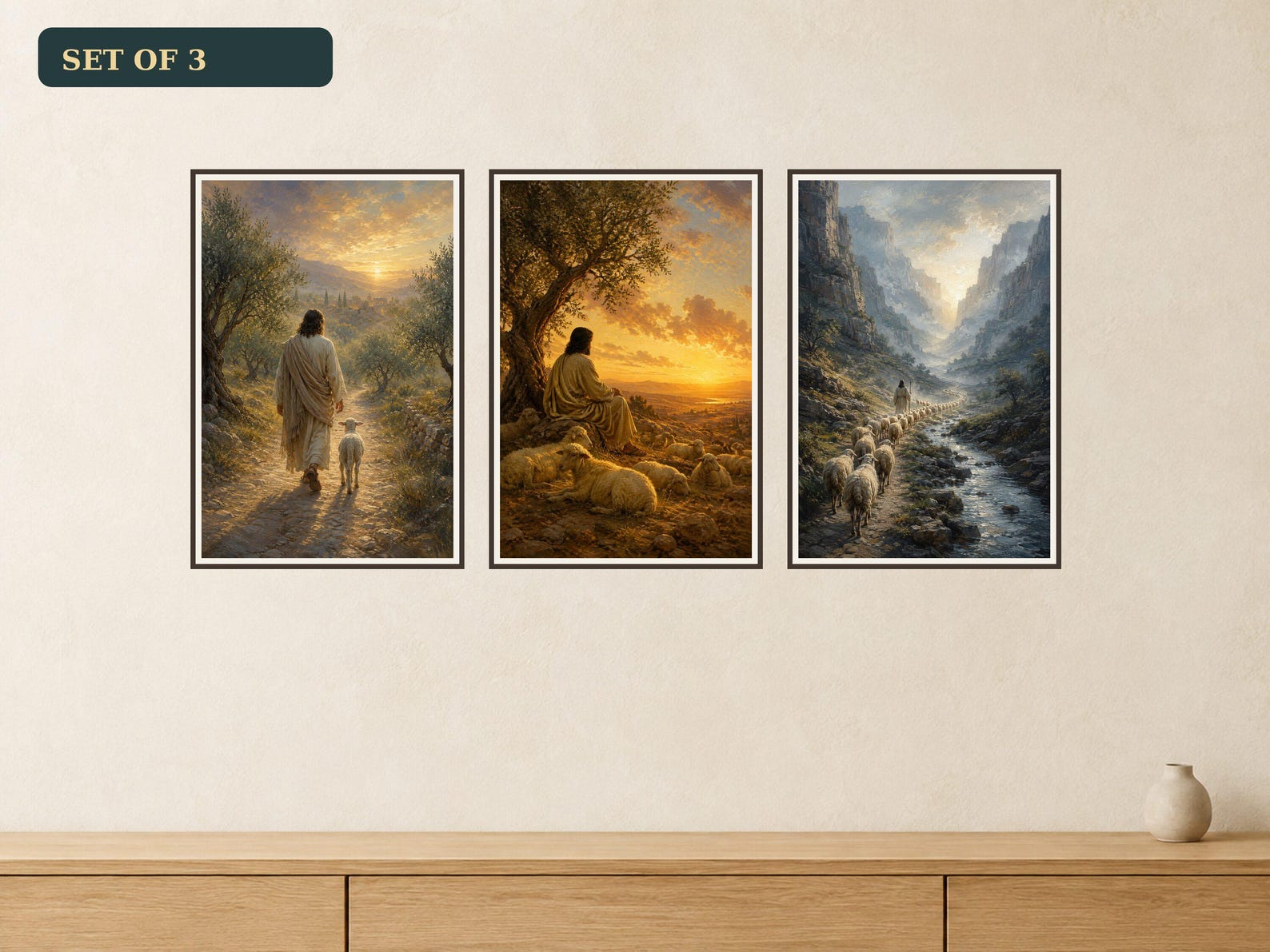
The good shepherd theme emphasizes Christ's knowledge, care, sacrifice, and keeping. Kingship designs may draw from Revelation but should not combine symbols from unrelated chapters casually. If Revelation is the main theme, read Jesus in Revelation: Symbols and Meaning before choosing among lampstands, Alpha and Omega, Lamb, crown, sword, white horse, or New Jerusalem imagery.
Miracles and signs
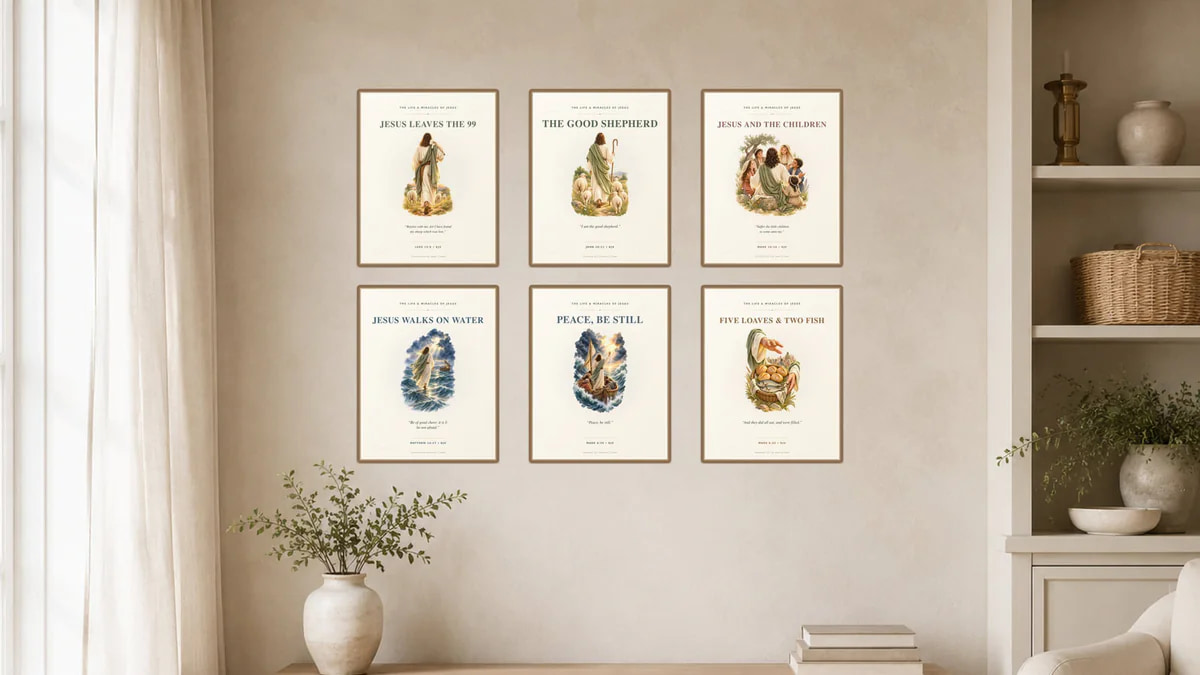
Sea, bread, healing, and resurrection signs reveal Jesus rather than simply celebrating the dramatic event. The miracles of Jesus guide and Jesus Christ collection connect the scenes with their Gospel purpose.
Good Shepherd or Lost Sheep: which theme fits the gift?
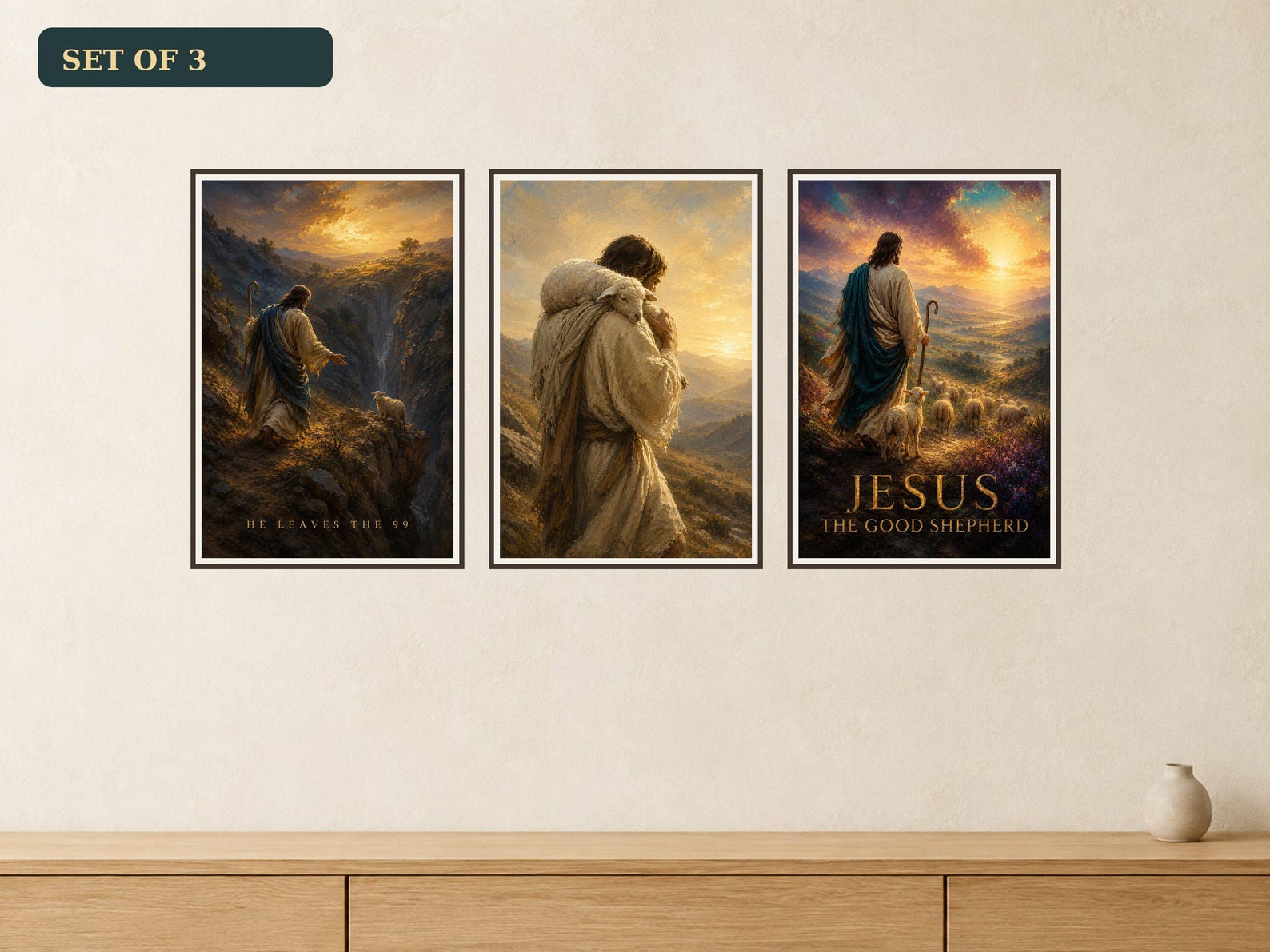
These themes belong together, but they answer different questions. John 10:11–18 presents Jesus as the Good Shepherd who knows His sheep and lays down His life for them. Luke 15:1–7 tells the parable of a shepherd seeking a lost sheep and rejoicing when it is found. Read the passage you want the gift to recall before choosing the scene.
| Choose this emphasis | Passage to read | What to look for |
|---|---|---|
| Knowing, following and being cared for by the Shepherd | John 10:11–18 | A shepherd-and-flock theme, understood alongside Jesus' self-giving words |
| Seeking, finding and rejoicing | Luke 15:1–7 | A lost-sheep scene that sends the viewer back to the parable and its call to repentance |
Jesus Leaves the 99 is the more direct starting point when the seeking-and-finding story is the intended focus. Jesus the Good Shepherd With His Flock offers a shepherd-and-flock subject to compare when the recipient especially values that theme. These are artistic interpretations, not documentary views of the passages. Do not assume either product prints the Bible text simply because its theme is biblical; inspect its artwork view and file description.
For a parent, friend or spouse, begin with a passage they already return to rather than assigning them a spiritual problem through the gift. A note such as “I remembered our conversation about this passage” explains your choice without telling the recipient how they must feel. The artwork itself does not promise protection or a particular outcome.
Compare the Good Shepherd collection, then check the printing guide before preparing a finished print. For a Christmas gift, leave the seasonal decoration decision with the recipient: this theme can remain on display after December.
Decide between a single statement and a bundle
A single print gives one verse room to breathe. It is usually best for a narrow entryway, bedside table, desk, or small prayer corner. A coordinated set works for a living room, church corridor, classroom, or study where several connected truths can be read together.
For bundles, ask three questions:
- Can every component be identified without reading the small caption?
- Do the scenes share a purposeful visual language without repeating composition?
- Does the overview show the exact number of included designs clearly?
Premium unity comes from palette, typography, texture, and framing. It does not require duplicated backgrounds or the same central figure seven times.
Use responsible visual symbolism
Scripture does not give a modern photographic portrait of Jesus. Artwork may use symbolic, historical, silhouette, or scene-based approaches, but a listing should not present an imagined face as an authoritative likeness. Designs that focus on Gospel symbols, landscape, hands, garment details, or the action of a passage can keep attention on the text without making claims the Bible does not make.
Do you want the light theme or the verse on the wall?
First decide what the viewer should be able to read. Two light-themed designs can suit the same room while offering different things: an actual Scripture quotation or a picture that recalls a passage.
| Your priority | Exact design to compare | What to check |
|---|---|---|
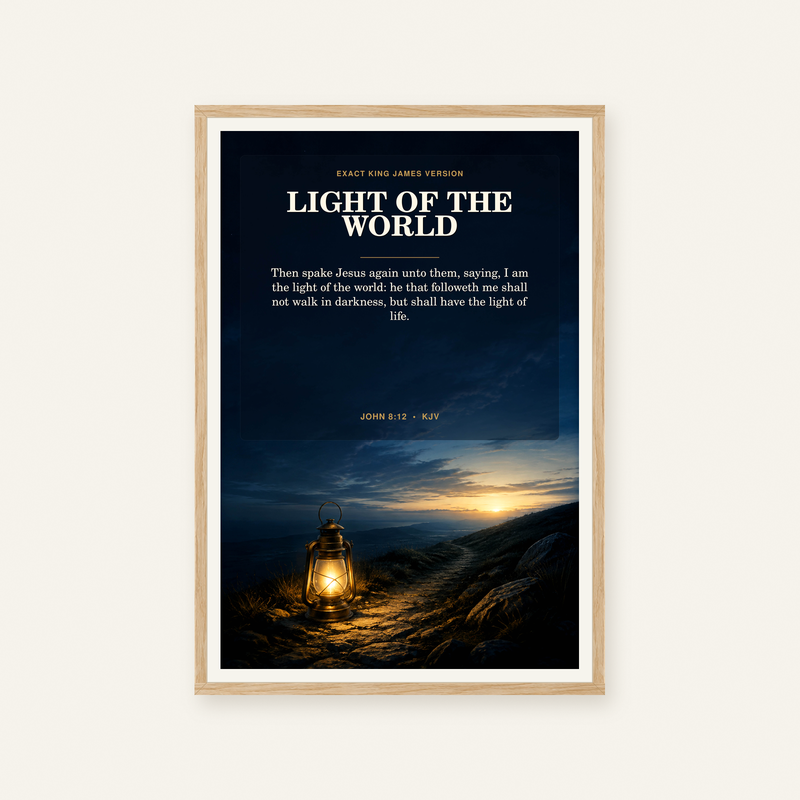
| Read Jesus’ words about the light of life | Light of the World — John 8:12 | The product presents John 8:12 KJV; check the smallest line and the reference at your intended size. |
| Choose an image without printed lettering | Light in the Darkness | This is a textless scene. John 1:5 is its thematic context, not wording printed on the artwork. |
John 8:12 records Jesus’ statement about following Him. John 1:5 belongs to the Gospel’s opening account of the light shining in darkness. Read the intended passage before writing a gift note. A lantern, gorge or golden horizon is a design choice; it is not a detail you should add to the biblical account.
For a reading corner, choose the first design when visible words are the purpose. If the recipient prefers a painting without text, the second may be a better fit. Both are digital artworks; printing and any frame are separate. Compare the Light of the World collection without assuming that every image in it contains a verse.
Avoid mixing symbols only for visual drama. A crown of thorns, white horse, shepherd staff, Alpha and Omega, and empty tomb all relate to Christ, but placing all of them in one image can blur distinct passages. A set can give each theme its own space.
Match the artwork to the room
In a living room, one larger Gospel statement or a balanced trio can become a clear focal point. In a prayer room, choose text readable from the seated position. In a nursery or child's room, the good shepherd, Jesus' care for children, light, or a simple Gospel promise is usually more appropriate than intense crucifixion or Revelation imagery. In an office, strong typography and restrained colors can keep the work devotional without feeling decorative for its own sake.
Frame placement matters. Test the outside dimensions with paper, leave enough negative space around long text, and avoid glare. A 12×18 frame needs a 2:3 file; 8×10 needs 4:5; 12×16 needs 3:4; and 11×14 needs its own ratio. Read the printable wall art size guide before ordering frames.
Verify every word and reference
Familiar Jesus sayings are frequently shortened, blended, or modernized online. If a product says KJV, compare the displayed text with a trusted KJV source. Check “to day” in Hebrews 13:8, “I am” capitalization as actually presented in the verse, punctuation, and the full reference. A design title can use a shorter phrase, but the artwork should not label a paraphrase as an exact quotation.
Read surrounding verses when symbolism is important. For example, John 10 contains both door and good shepherd language; John 15's vine image includes abiding and fruitfulness; John 11's resurrection statement comes in the grief of Lazarus's death; Revelation titles appear in specific visions and messages.
A Jesus Christ art buying checklist
- The verse, reference, and selected translation are exact.
- The symbol belongs to the passage or theme.
- The product description explains the Gospel connection in real buyer language.
- Every bundle component is visually distinct.
- Long text remains readable at the intended size.
- The listing gallery includes a clean artwork view, room mockup, file details, and bundle overview.
- Included print ratios match common frames.
- Digital delivery and license terms are clear.
Jesus Christ wall art should not rely on religious atmosphere alone. It can keep His words, the cross, resurrection, shepherding, kingship, and promised return before a household in a visually disciplined way. Explore the Jesus Christ Scripture collection and choose the theme that deserves a permanent place in the room.
Related printable Scripture art
Keep this biblical truth in view.
Frequently asked questions
Questions about this topic
What are the seven I AM statements used in Jesus wall art sets?+
Common sets use bread of life, light of the world, door, good shepherd, resurrection and life, way/truth/life, and true vine from the Gospel of John. Each reference should be verified individually.
How can a Jesus Christ wall art bundle avoid duplicate designs?+
Give each Gospel theme its own scene—such as bread, lamp, doorway, shepherd field, empty tomb, path, and vine—while coordinating color, typography, and texture across the set.
Is symbolic Jesus wall art appropriate for a nursery?+
Gentle themes such as the good shepherd, light, care for children, or a simple Gospel promise can suit a nursery. Choose age-appropriate imagery, readable text, and a calm composition.
Scripture for your space